
PARAGON

PARAGON
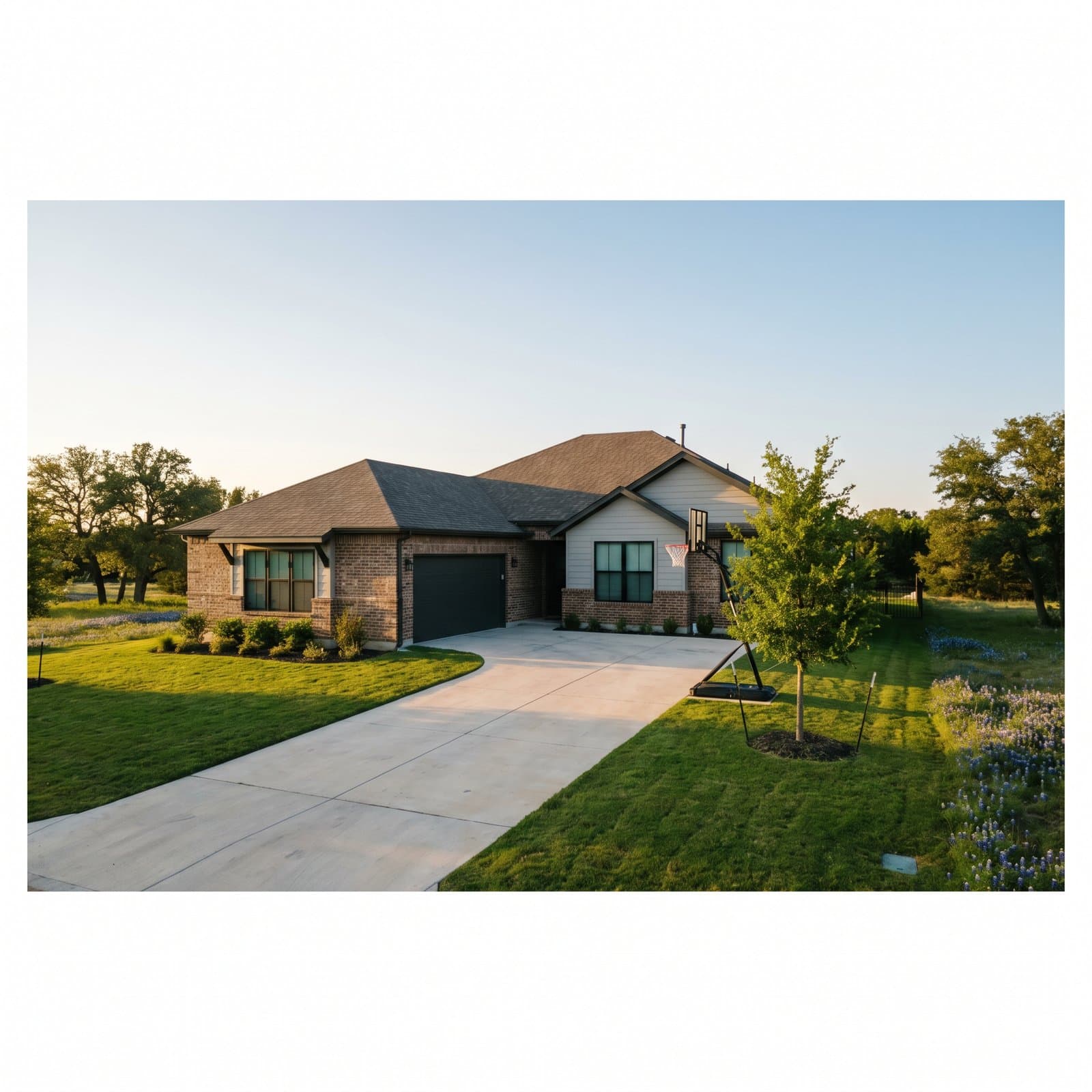
Austin is the Texas capital, a city of just over one million residents whose limits reach into Travis, Williamson and Hays counties.
The City of Austin is the Texas capital and the seat of Travis County. Its limits also reach into Williamson and Hays counties. The Census Bureau counted 961,855 residents in 2020 and estimated 1,002,632 for July 2025. Ten council districts cover the city. Past the limits is the extraterritorial jurisdiction, where Austin collects no city tax. Which side of that line an address is on decides its tax bill and its building rules.
The Republic of Texas established Austin in 1839 as its permanent capital, according to the Handbook of Texas. The first townsite was 640 acres on the Colorado River between Shoal Creek and Waller Creek. By the 2020 Census the city's land area was 319.94 square miles.
That spread is why "Austin" means different things on different documents. A house inside the city can be in Williamson County and zoned for Round Rock ISD, which is how the District 6 council office describes much of its territory. This guide covers Austin as a government: who taxes, who regulates and who sends the utility bill. For homes on the market, go to Austin homes for sale or luxury homes.
Checked November 21, 2026. Sources are listed at the end of this page.
1,002,632
Census Bureau estimate, July 1, 2025
319.94 sq mi
Land area, 2020 Census
10
City Council districts
Listings provided by Unlock MLS via IDX Broker. Paragon Realty Group, brokered by eXp Realty, LLC.
Austin's city limits lie mostly in Travis County and extend into Hays and Williamson counties, the City said when it announced the one-million mark in May 2026. Voters approved ten geographic council districts in 2012, and that 10-1 council was inaugurated in January 2015.
The City's jurisdiction page describes three kinds of territory:
Lines move. On May 21, 2026, the council approved full-purpose annexation of about 2,614 acres in eastern Travis County known as the Dog's Head. Look up any parcel on the City's Jurisdictions Webmap before you assume which rules apply. For acreage past the line, see Travis County land.
The Austin City Council adopted a rate of $0.579948 per $100 of taxable value on Aug. 12, 2026, up from $0.524017, Community Impact reported. The City's tax rate page shows the same figure. That is one line of five on the bill for an Austin homeowner in Travis County and Austin ISD:
| Taxing unit | Tax year 2026 | Prior year |
|---|---|---|
| City of Austin | $0.579948 | $0.524017 |
| Travis County | $0.386210 | $0.375845 |
| Central Health | $0.132863 | $0.118023 |
| Austin ISD | $0.9184 | $0.9252 |
| Austin Community College | $0.103643 | $0.1034 |
| Total (our addition) | $2.121064 | $2.046485 |
Individual rates as reported by Community Impact in October 2026. Both totals are our own arithmetic.
Change the county or the school district and the table changes. An Austin address in Williamson County or Round Rock ISD carries those units' rates instead, which we haven't listed. Pull them from the parcel's appraisal district record. Travis County bills for this year are due Feb. 1, 2027. For exemptions, read our homestead explainer.
Austin ISD is the big one, and it isn't the only one. A 2016 City Council resolution counted nine school districts within the City of Austin, with Austin ISD covering the largest area. That count is ten years old, and we found no current official list. The districts we could confirm:
Austin ISD's map is moving too. The board voted in November 2025 to close 10 school buildings, and the district's boundary page posts recommended changes for the 2027-28 school year. Confirm the assigned campus with the district before you make an offer.
Both big utilities belong to the City. Austin Energy is a City department, and the City Council sets its rates. Its service area covers about 437 square miles, and only about half of that is inside the Austin city limits. The rest takes in all or part of Bee Cave, Lakeway, Rollingwood, Pflugerville and Cedar Park. An Austin Energy bill doesn't prove an Austin address.
Austin Water dates to 1902, when the City bought out a private water company. It now serves more than 1 million people across 544 square miles. Being in the city doesn't settle it, though. The City's jurisdiction page lists water and sewer extension as a benefit of annexation only where another utility doesn't already hold the certified service area. On the edges of Austin, confirm both providers by address.
Austin rewrote its residential rules between 2023 and 2026. Four of them reach most lots inside the limits:
The trade is plain. HOME gives you more options on your own lot and gives the neighbors the same options on theirs. Private deed restrictions can still limit a project, and the City leaves that check to the applicant.
The City keeps a list of adopted neighborhood plans, each with its adoption date. Several share a name with a page on this site.
Names without an adopted plan have softer edges, and listings use them loosely. Check where the lines come from before you compare prices.
Looking at land rather than a home in town? The Travis County ranch and land guide covers the groundwater district, appraisal district, and due-diligence checks for rural property in the county.
No. West Lake Hills is an incorporated city that receives its mail through Austin, according to the Handbook of Texas. Land in the extraterritorial jurisdiction is outside the city limits too, with no city tax and no city zoning. Look up the parcel on the City's Jurisdictions Webmap, then confirm the taxing units on the appraisal district record. Moving from out of state? Start with our relocation page.
Realtor.com showed a citywide median list price of $525,000 for October 2026, down 8.70% from a year earlier. That is an asking price, not a sold price, and it is one number for the whole city. It won't describe any single Austin neighborhood. Realtor.com's Austin market page carries the current month, and our October 2026 market report covers the rest.
It depends on the territory. Inside the city, every owner or operator must be licensed. In the limited purpose jurisdiction, a short-term rental must still get a license but isn't subject to the City's Hotel Occupancy Tax. In the ETJ, the City's short-term rental page says no license is needed and no local hotel tax is paid. Private deed restrictions are a separate question, so read the covenants too.
Yes, by petition. Senate Bill 2038 took effect Sept. 1, 2023, and the City's ETJ release page says that when a petition complies with the law, Austin has no discretion and must release the area. The City has 45 days from the filing date to release the area or deny an invalid petition. No City taxes are collected in the ETJ either way. See ranch and land for acreage.
Tell us what you want in Austin, and we'll set up a search and a time to talk it through.