
A ranchette is a rural homesite, usually 5 to 50 acres, bought for country living rather than farming. Near Austin, septic and well rules decide how small one can be.
By Joseph Stancil, REALTOR® since 2012, Paragon Realty Group, brokered by eXp Realty, LLC (TREC broker license #603392). Texas Sales Agent License #760204.
The word comes up more often now because of a new project in Driftwood, and buyers keep asking the same practical questions. What makes a property a ranchette rather than a big lot, which rules set the minimum tract size, and why is it harder to finance than a house in town? This guide answers those questions for the Hays County side of the Hill Country, where most ranchette inventory near Austin sits. For the county's water districts and habitat permits in more depth, see our Hays County ranch and land guide. For the town itself, start with our Driftwood area page.
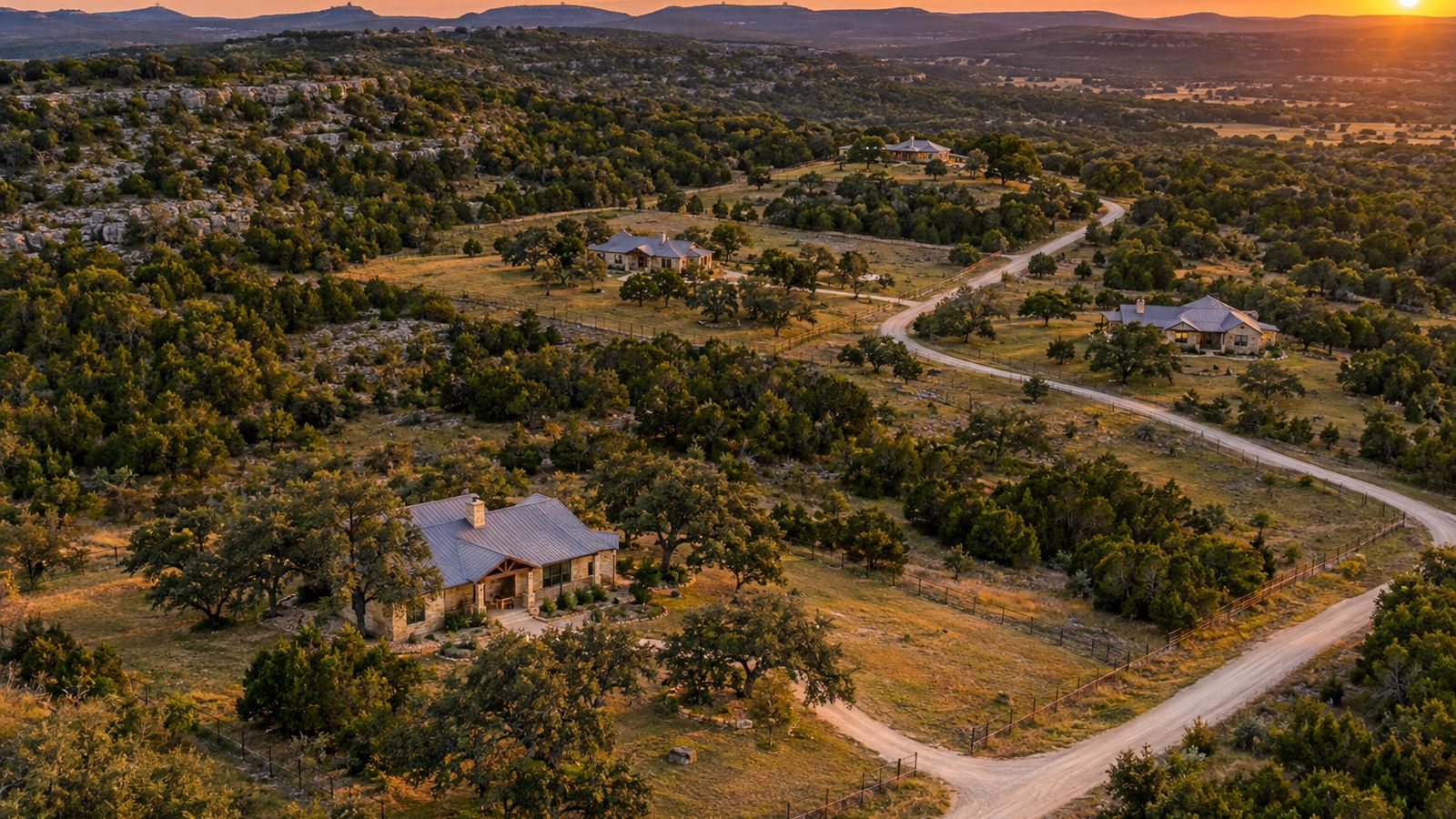
What is a ranchette?
No Texas statute defines "ranchette." It is a marketing and planning term for a rural residential tract that is bigger than a suburban lot and smaller than a working ranch. Most listings that use the word fall between 5 and 50 acres, and the most common size in the Hill Country west of Austin is roughly 10 to 20 acres.
Three traits separate a ranchette from a large lot:
- The house is the point. The land supports a home, a barn, a few animals or a garden. It is not expected to pay for itself as a farm.
- Services are rural. Water usually comes from a private well or rainwater collection, and wastewater goes to an on-site septic system instead of a city sewer line.
- Rules come from the county and the state. Most ranchettes sit outside city limits, so lot size, driveways and septic permits are governed by county regulations rather than city zoning.
That last point explains why you will not find true ranchettes inside a small city such as West Lake Hills, even though people search for them there. Our West Lake Hills page covers that city's one-acre residential lots. The acreage lies farther west, around Dripping Springs, Driftwood and Wimberley.
The Driftwood project behind the headline
On November 26, 2026, the Austin Business Journal reported that a ranch-owning couple is planning their latest ranchette community in Hays County, with "57 ranchettes" coming to market, and that the couple's own Wimberley ranch inspired five ranchette communities (Austin Business Journal). The full story is behind a paywall, so this guide relies only on its public headline and summary.
The developer's community page describes 57 homesites on 675 acres, with homesites of 10 to 17 acres on Lone Woman Mountain between Wimberley and Dripping Springs, along with trails, a community pond, a hilltop park and a wildlife management program (RanchesAt Driftwood). The page does not list prices, water source, septic design or association dues. A buyer would need to ask for those in writing before making an offer. Paragon Realty Group is not affiliated with the developer, and this is not an endorsement of the project.
Hays County lot-size rules set the floor
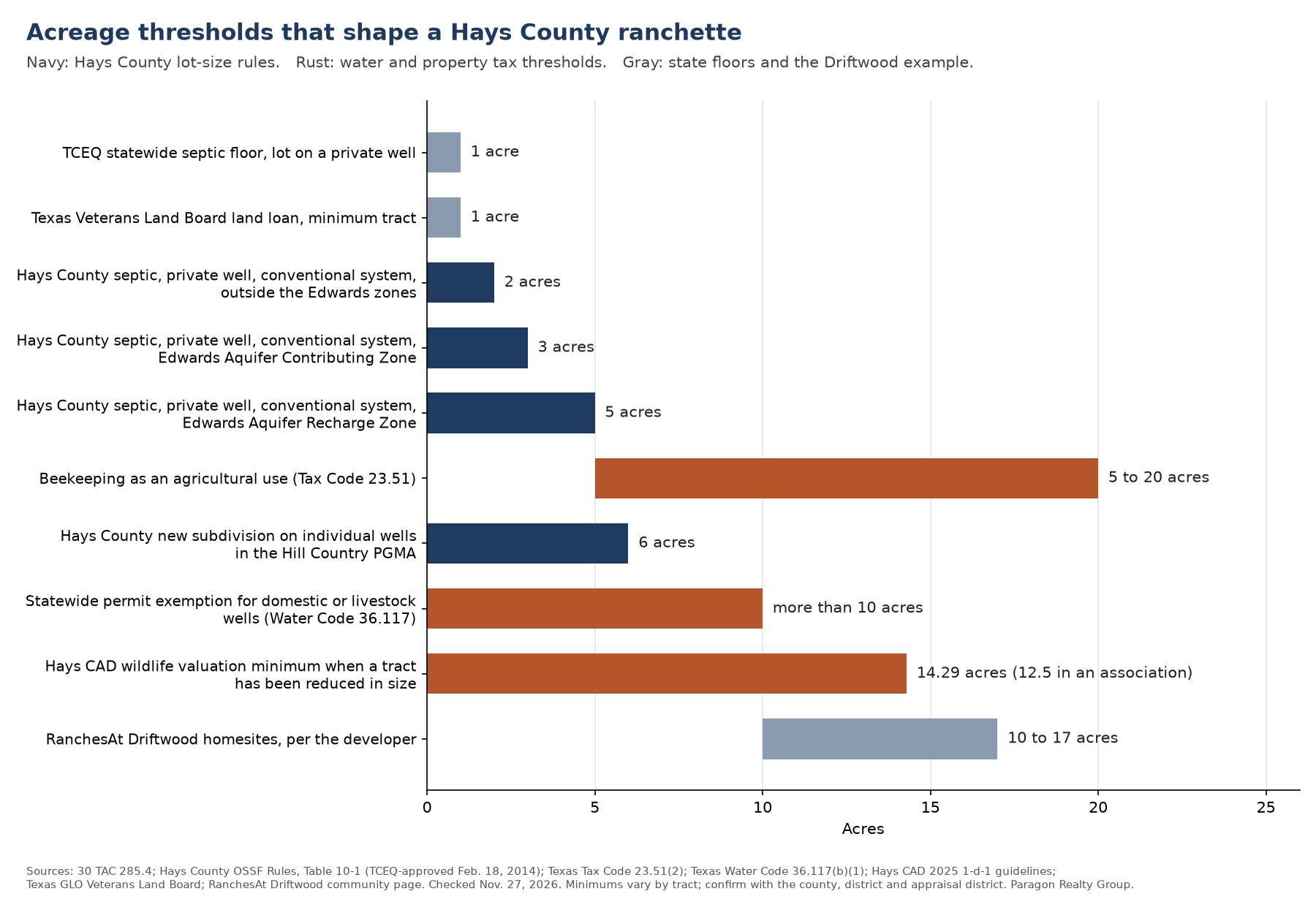
The state sets a baseline for septic systems. Under the TCEQ septic rule, a new single-family lot platted under the current standards needs at least half an acre when served by public water, and at least one acre without public water (30 TAC §285.4). Hays County adopted stricter minimums that depend on where the lot sits over the Edwards Aquifer and where its water comes from (Hays County On-Site Sewage Facility Regulations).
| Location of the lot | Water source | Minimum acres, advanced septic | Minimum acres, conventional septic |
|---|---|---|---|
| Edwards Aquifer Recharge Zone | Private well | 3.00 | 5.00 |
| Edwards Aquifer Contributing Zone | Private well | 2.00 | 3.00 |
| Elsewhere in the county | Private well | 1.50 | 2.00 |
| Elsewhere in the county | Public groundwater supply | 1.00 | 1.50 |
| Elsewhere in the county | Rainwater collection | 0.50 | 1.00 |
Source: Hays County OSSF Rules, Table 10-1, adopted June 4, 2013 and approved by TCEQ on February 18, 2014.
A separate rule matters more for new ranchette subdivisions. In the Hill Country Priority Groundwater Management Area, the county's development regulations require at least 6 acres per lot for a new subdivision served by individual private wells (Hays County Development Regulations). Much of western Hays County sits in that area.
Those rules are being rewritten. The county's draft keeps septic-based lot sizing and is aimed at a January 1, 2027 start date, with a revised draft posted in November (Hays County Development Regulations Re-Write). A public hearing is set for December 1, and one commissioner has proposed raising the 6-acre minimum to 10 acres (Hays Free Press). If you are buying land you plan to divide later, check the adopted version before you count on a lot yield.
Wells: who regulates the water under a ranchette
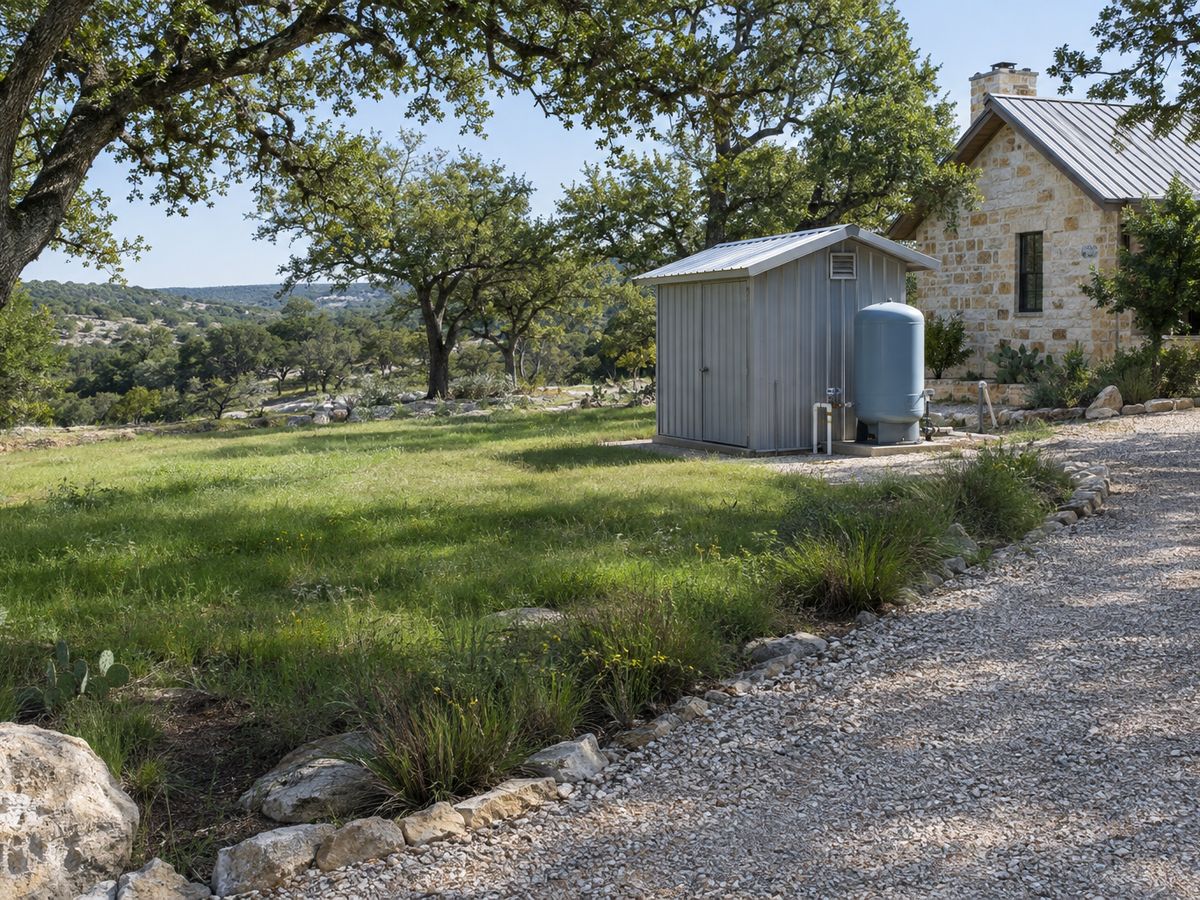
Groundwater districts, not the county, regulate wells. State law requires each district to exempt from permitting a well used only for household use or livestock and poultry on a tract larger than 10 acres, as long as it cannot produce more than 25,000 gallons a day (Texas Water Code §36.117). Exempt does not mean unregulated. Districts can still require registration, spacing and construction standards.
In much of western Hays County, wells answer to the Hays Trinity Groundwater Conservation District, whose rules, amended August 6, 2026, exempt a household well producing under 25,000 gallons a day from an operating permit, but the owner must still register it and notify the district before drilling (Hays Trinity GCD District Rules). The district's enabling law also bars it from permitting those small household wells (Special District Local Laws Code ch. 8843).
For a buyer, the practical questions are simple. Is there an existing well, and is it registered? What is the recorded depth and yield? Has the water been tested? If there is no well, ask a local driller what nearby wells have produced, because Trinity Aquifer yields vary a lot over short distances. Rainwater collection is common on ranchettes for that reason.
Septic on acreage
Nearly every ranchette uses an on-site sewage facility. In Hays County, the county's development services office issues septic permits under the order described above, and the private-well setback from a septic system is normally 100 feet (Hays County OSSF Regulations). Thin soil over limestone is common west of Austin, which often pushes buyers toward advanced aerobic systems with spray fields. Those systems need a maintenance contract and regular inspections.
Before closing, ask the seller for the septic permit and the license to operate, along with the design and recent maintenance reports. On raw land, budget for a site evaluation, and confirm the planned house site leaves room for the system and the setbacks.
Deed restrictions and HOAs
Most new ranchette communities come with recorded deed restrictions, and many have a mandatory property owners' association. Restrictions often cover minimum home size, building materials, setbacks, livestock limits, fencing styles, short-term rentals and whether a tract can be divided. Texas law treats these covenants as enforceable, and a property owners' association can enforce them (Texas Property Code ch. 202).
When the subdivision has an association that can levy assessments, the association must deliver, on a written request, the restrictions, the bylaws and rules, and a resale certificate showing dues, special assessments and any known violations (Texas Property Code ch. 207). Make that delivery a contract condition. Read the restrictions before you sign a contract, not after. A ban on further subdivision, a minimum-acreage rule or a limit on animals can decide whether a tract fits your plans.
Easements also travel with the land. A pipeline, power line or shared road easement can limit where you build. Our guide to transmission line and pipeline easements explains what to look for on the survey and title commitment.
Ag and wildlife valuation on 10 to 20 acres
A ranchette does not get agricultural valuation just because it is rural. The land has to be in a qualifying use, and the appraisal district applies its own standards. Two thresholds matter most for small tracts.
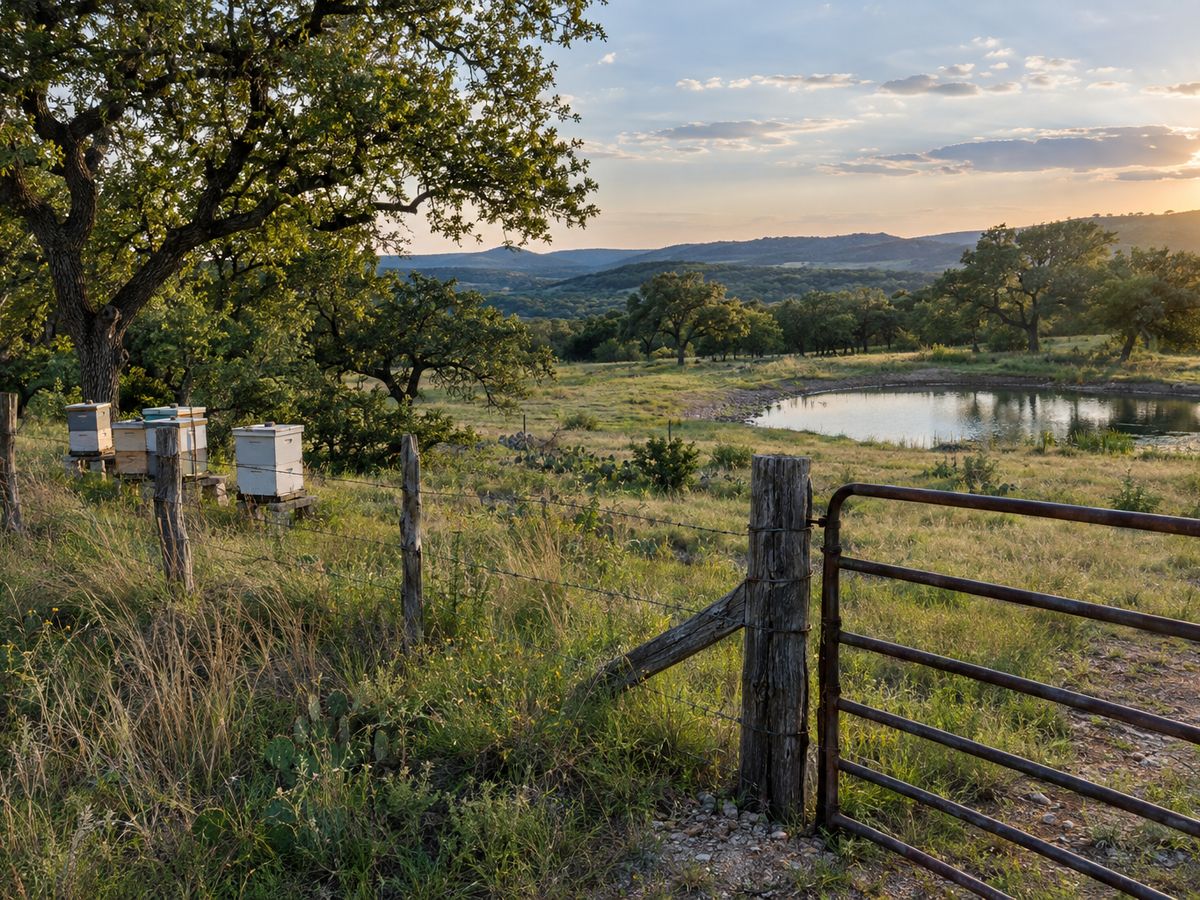
- Beekeeping counts as an agricultural use on 5 to 20 acres (Texas Tax Code §23.51).
- Wildlife management can replace a qualifying agricultural use, but the land must already hold agricultural valuation. For a tract that has been reduced in size, the Hays Central Appraisal District sets a minimum of 14.29 acres, or 12.5 acres per member of a wildlife management association (Hays CAD 2025 guidelines). Texas Parks and Wildlife notes that no minimum applies unless the tract has shrunk (TPWD legal summary).
That is why so many new ranchette tracts land between 10 and 17 acres. For filing deadlines, livestock standards and the rollback tax, read our Texas ag exemption guide. For larger tracts managed for game, see our Texas hunting ranch guide.
Financing a ranchette versus a house
Financing is where ranchette buyers are most often surprised. Most conventional mortgages are sold to Fannie Mae or Freddie Mac, and Fannie Mae will not buy loans on vacant land or on agricultural properties such as farms and ranches. The property must be residential in nature (Fannie Mae Selling Guide B2-3-01). A rural site larger than usual can still qualify if comparable sales show that size is typical for the area (Fannie Mae Selling Guide B4-1.3-03).
In practice, that creates three paths:
- A finished home on acreage. If comparable sales support the acreage and the home is the main source of value, a conventional, FHA or VA loan may work. Expect the appraiser to need rural comparables.
- Raw land. Buying a bare 10-acre homesite usually means a land loan from a bank, credit union or farm credit lender. These loans often carry larger down payments, shorter terms and higher rates than a home loan.
- Land plus construction. Many buyers use a construction-to-permanent loan after buying the land, so the house and the tract end up under one mortgage.
Texas veterans have an extra option. The Texas Veterans Land Board offers land loans on tracts of at least one acre, with a 5% minimum down payment, a 30-year fixed term and a requirement for legal, usable access at least 60 feet wide (Texas General Land Office). Check the program page for current loan limits and rates, which change.
Talk with a lender before you write an offer. Ask whether it will lend on the tract's acreage, what appraisal it will order and whether a well and septic inspection is required.
Due-diligence checklist
Use this list during the option period on any ranchette near Austin:
- Survey and plat: boundary survey, recorded plat, easements and the flood zone.
- Access: a recorded road or easement to a public road, and who maintains it.
- Water: well registration, depth, yield and a water test, or a rainwater plan sized for the house.
- Septic: existing permit and operating license, or a site evaluation for a new system.
- Restrictions: deed restrictions, association documents, dues and any ban on further division.
- Taxes: current valuation, whether ag or wildlife valuation is in place and whether a rollback could apply.
- Utilities and internet: electric provider, line extension costs and broadband options.
- Rules in motion: the status of the Hays County rewrite if lot size or division matters to you.
If you are comparing tracts in Driftwood, Dripping Springs or Wimberley, our ranch and land hub and the rural land rules index collect the county guides in one place. When you are ready to walk a property, contact Paragon Realty Group.
Frequently asked questions
How many acres is a ranchette in Texas?
There is no legal definition, but most Texas ranchettes run 5 to 50 acres. Around Austin, many new tracts fall between 10 and 20 acres. Those sizes are not random. They sit just above the county lot minimums for private wells, above the 10-acre line in the state well exemption and near the wildlife valuation minimums that some appraisal districts use. A listing that calls 2 acres a ranchette is using the word loosely, so look at the actual tract size and the rules that apply to it.
What is the difference between a ranchette and a ranch?
A ranchette is mainly a home on land, while a ranch is mainly a working agricultural operation. A ranch is usually large enough to run livestock, crops or game as a business, and the land may produce income. A ranchette is bought for space, privacy and a few animals, and the house carries most of the value. That difference matters for financing, because lenders treat a home on acreage differently from an agricultural property, and for taxes, because rural land alone does not qualify for ag valuation.
Can a ranchette be financed with a regular mortgage?
Sometimes, if the property is mainly a home and nearby sales support the acreage. Fannie Mae does not buy loans on vacant land or agricultural properties, but a larger rural site can qualify when comparable sales show that size is normal for the area. Bare land usually needs a land loan instead, often with a bigger down payment and a shorter term. Texas veterans may also look at the Veterans Land Board land program. Ask a lender before you make an offer, not after.
Do ranchettes near Austin have wells or city water?
Most ranchettes west of Austin rely on private wells or rainwater collection rather than city water. In western Hays County, the Hays Trinity Groundwater Conservation District requires household wells to be registered and requires notice before drilling, even though small wells do not need an operating permit. Some subdivisions have a water supply corporation line instead. Ask which source serves the tract, look at well records and get the water tested during your option period. Trinity Aquifer yields can vary a great deal between neighboring tracts.
Does a 10-acre ranchette qualify for ag exemption?
It can, but only if the land is in a qualifying agricultural use that meets the appraisal district's standards. Beekeeping qualifies on 5 to 20 acres under state law. For wildlife valuation, Hays CAD sets a 14.29-acre minimum when a tract has been reduced in size, or 12.5 acres per member of a wildlife management association, and the land must already hold ag valuation. A new 10-acre tract carved from a larger ranch may lose its valuation if the new use does not qualify. Ask the appraisal district before you close.
Joseph Stancil, TX License #760204, Paragon Realty Group, brokered by eXp Realty, LLC, TX Broker License #603392. General information, not legal, tax or financial advice. Lot-size, groundwater and valuation rules change, and Hays County is rewriting its development regulations, so confirm current requirements with Hays County, the applicable groundwater conservation district and the Hays Central Appraisal District before you buy. Nothing here is an offer of credit or a rate quote. Sources: Austin Business Journal (November 26, 2026); RanchesAt Driftwood community page; 30 Texas Administrative Code §285.4; Hays County On-Site Sewage Facility Regulations (adopted June 4, 2013; TCEQ-approved February 18, 2014); Hays County Development Regulations and the Development Regulations Re-Write page (revised final draft November 6, 2026); Hays Free Press (November 18, 2026); Texas Water Code §36.117; Hays Trinity Groundwater Conservation District Rules (amended August 6, 2026); Special District Local Laws Code ch. 8843; Texas Property Code chapters 202 and 207; Texas Tax Code §23.51; Hays Central Appraisal District 2025 agricultural guidelines; Texas Parks and Wildlife Department legal summary; Fannie Mae Selling Guide B2-3-01 and B4-1.3-03; Texas General Land Office, Veterans Land Board land loans. All sources accessed November 27, 2026. Paragon Realty Group is not affiliated with the Austin Business Journal, RanchesAt, Hays County, TCEQ, the Hays Trinity Groundwater Conservation District, the Hays Central Appraisal District, Texas Parks and Wildlife, Fannie Mae or the Texas General Land Office. Illustrations are AI-generated and do not show an actual property or community.

Joseph Stancil
Founder & Supervising Agent | Paragon Realty Group
Joseph Stancil, first licensed in real estate in 2012 and in Texas since 2021, writes every article in The Paragon Chronicle. His market analysis draws on proprietary data, direct transaction experience, and deep relationships throughout Austin's luxury communities.