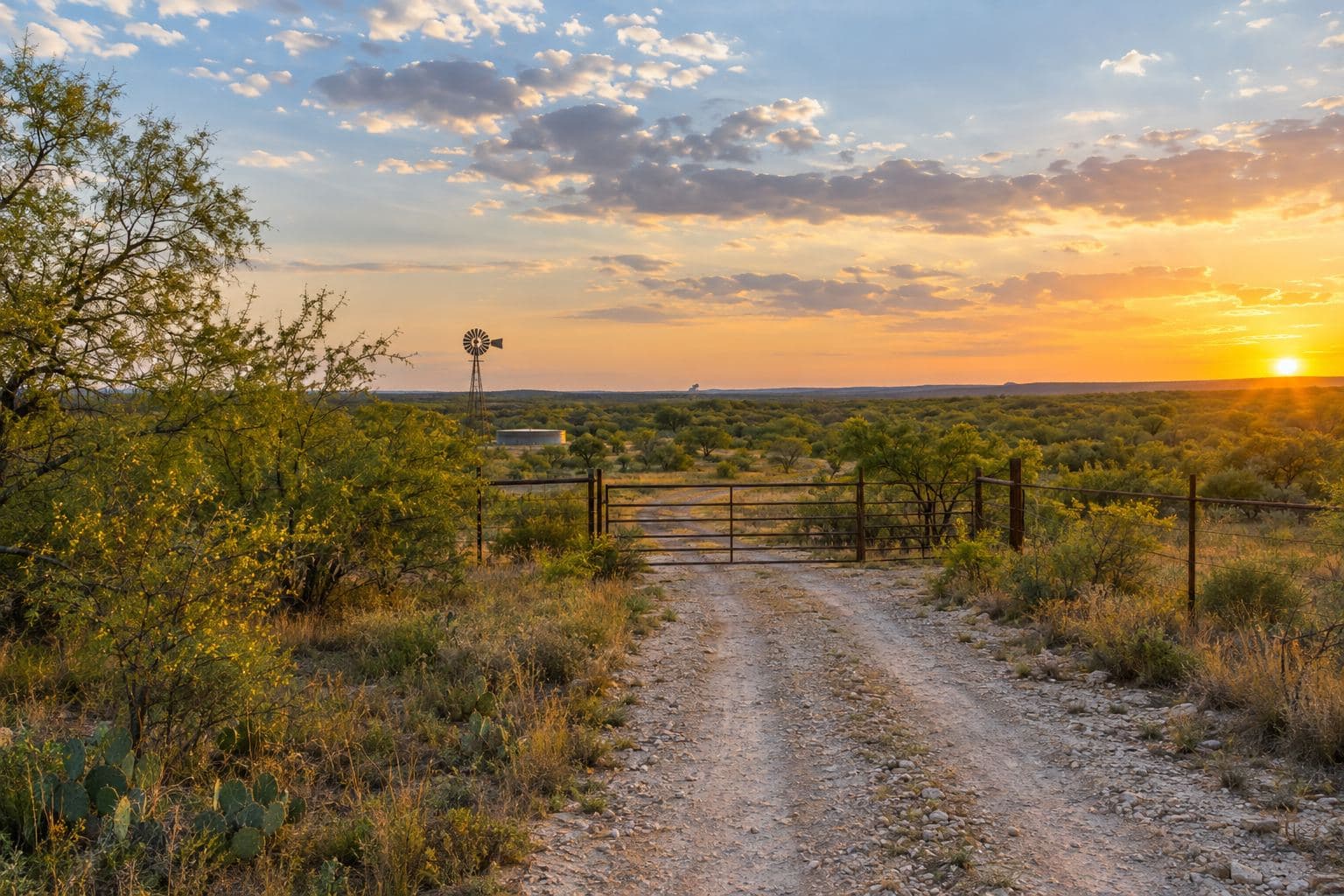

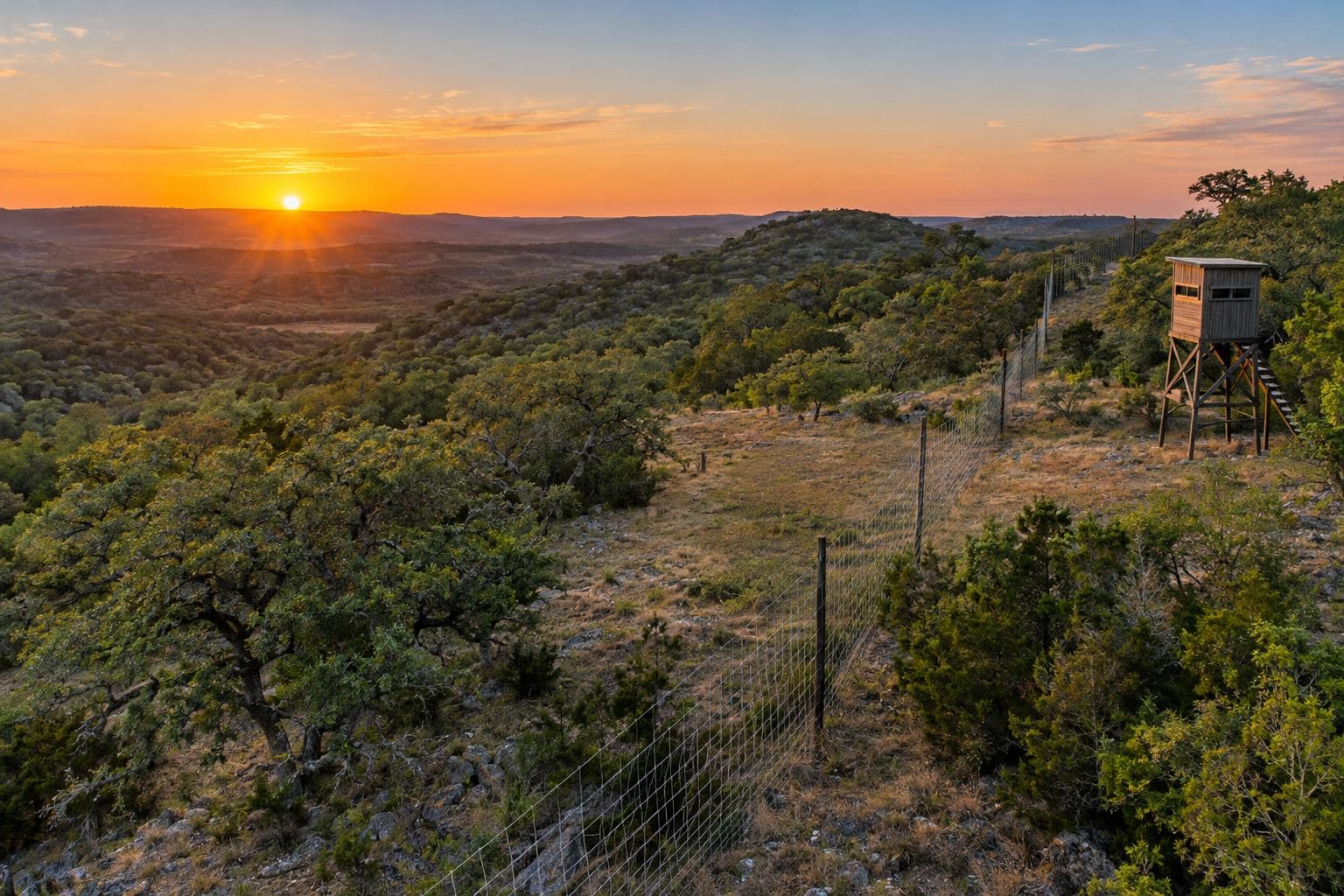
If you are searching for Texas hunting ranches for sale, the decisions you make before signing a contract will matter more than the acreage on the listing sheet. Fence type, wildlife-management plan status, county appraisal classification, water rights, and mineral ownership each carry financial and legal consequences that no amount of aerial photography can resolve. We work with buyers across the Hill Country and surrounding counties, and this guide covers the questions we walk through with ranch buyers.
By Joseph Stancil, REALTOR® since 2012, Paragon Realty Group, brokered by eXp Realty, LLC (TREC broker license #603392). Texas Sales Agent License #760204.
Our Central Texas ranch and land guides cover groundwater districts, appraisal districts and county rules for 16 counties.
What Defines a Texas Hunting Ranch: High-Fence, Low-Fence, and Partially Fenced Properties
The first question most buyers ask is whether a property is high-fenced or low-fenced. The answer shapes game management, hunting style, liability exposure, and maintenance cost — but it does not automatically determine a property's tax appraisal status.
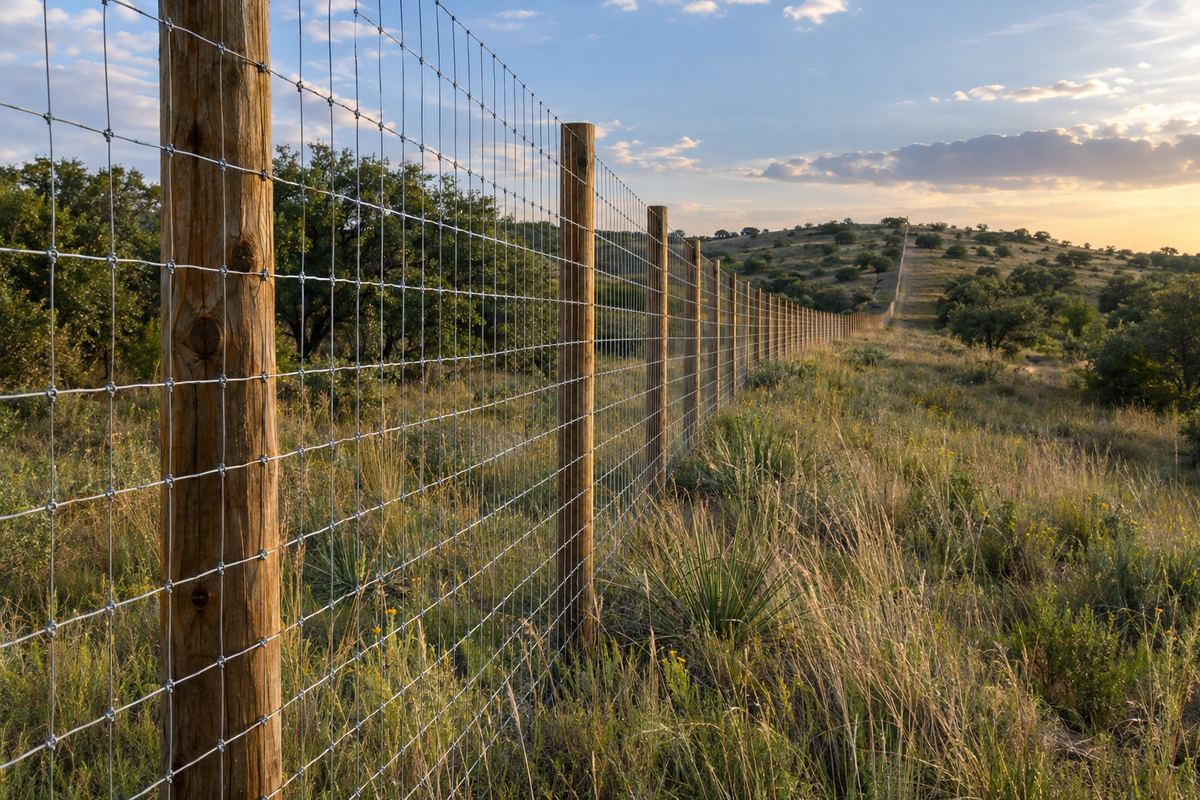
High-fence ranches use perimeter fencing typically eight feet or taller to contain game on the property. This supports controlled game management and genetics — operators can manage breeding stock, introduce specific deer genetics, control harvest pressure, and limit the influence of neighboring properties. The tradeoff is infrastructure cost, ongoing fence maintenance, and a hunting experience that some buyers find less appealing than free-range conditions.
Low-fence ranches allow natural wildlife migration across property lines. Deer, turkey, and other native species move freely, which means hunting quality is influenced by neighboring land use, neighboring harvest pressure, and regional wildlife populations. Many buyers prefer this model for native-species hunting. The management approach relies on habitat improvement, supplemental feeding programs, and harvest discipline rather than physical containment.
Partially fenced properties combine both approaches — a high-fenced pasture for exotics or managed whitetail alongside low-fenced sections for native-species hunting or cattle grazing. This is common across South and Central Texas, where operators run both native and exotic animals on the same tract.
One point worth stating clearly: fencing type does not automatically determine wildlife valuation eligibility. A high-fenced exotic operation and a low-fenced native whitetail ranch can both qualify — or fail to qualify — for wildlife-management appraisal depending on statutory compliance, county requirements, and active management practices. We address that in detail below.
How Texas 1-D-1 Wildlife Valuation Works and What It Is Not
Wildlife valuation is not a tax exemption. That distinction matters, and it gets misrepresented frequently in listing descriptions and casual conversation.
Under Texas law, land appraised under the 1-D-1 open-space provisions remains taxable property. What changes is the appraisal basis: instead of being appraised at unrestricted market value, the land is appraised based on its qualifying productivity — the income-generating capacity of the land for agricultural or wildlife purposes. For a ranch worth several million dollars at market value, the difference in appraised value can be substantial. But the land still carries a tax obligation, and a rollback tax applies if the property is converted to a non-qualifying use.
Texas Parks and Wildlife provides qualification guidance, but the agency does not approve or administer wildlife-management appraisals. That role belongs to the county appraisal district.
To qualify for wildlife-management appraisal, a property must meet all of the following:
- The land must already qualify for open-space agricultural appraisal under 1-D-1
- The primary use of the land must be wildlife management
- The owner must have an active, written wildlife-management plan in place
- The property must meet acreage thresholds established by the county
- The owner must implement at least three qualifying wildlife-management practices
The Texas Comptroller publishes guidance that county appraisal districts use to evaluate applications. The county — not TPWD — approves or denies the plan and determines whether the property qualifies. Buyers who assume that a property's current appraisal status will continue after purchase, or that any high-fenced ranch automatically qualifies, are taking a risk that should be resolved before closing, not after.
Does High Fencing Qualify a Ranch for Wildlife Valuation?
High fencing supports controlled game management, but it does not automatically establish legal eligibility for wildlife-management appraisal. We see this assumption frequently, and it is worth addressing directly.
A high-fenced exotic-game operation may or may not qualify for wildlife-management appraisal depending on whether it meets every applicable requirement. Qualification requires statutory compliance with the Texas Property Tax Code, acreage thresholds set by the county, an approved wildlife-management plan on file, and documented implementation of at least three qualifying practices during the tax year. A ranch that satisfies all of those requirements can qualify regardless of fence type. A ranch that fails any one of them can be denied regardless of how impressive the fencing infrastructure appears.
The Texas Comptroller's agricultural-land appraisal manual outlines the statutory framework and the criteria county appraisal districts use to evaluate applications. County appraisal districts determine eligibility based on that manual and current TPWD guidelines. Different counties apply these standards with different levels of scrutiny, and what qualifies in one county may face additional documentation requirements in another.
Buyers should request the property's current appraisal records, review the active wildlife-management plan if one exists, and confirm qualification status directly with the applicable county appraisal district before placing any financial reliance on continued 1-D-1 status.
Wildlife-Management Plan Requirements: Three Practices, County Approval, and Transition Risk
TPWD's white-tailed deer management resources explain harvest recommendations, permits and chronic wasting disease zones, and the Texas Animal Health Commission sets movement rules for livestock and some exotic species.
A wildlife-management plan is not a document you create once and file away. It is an active management commitment that requires annual implementation and documentation.
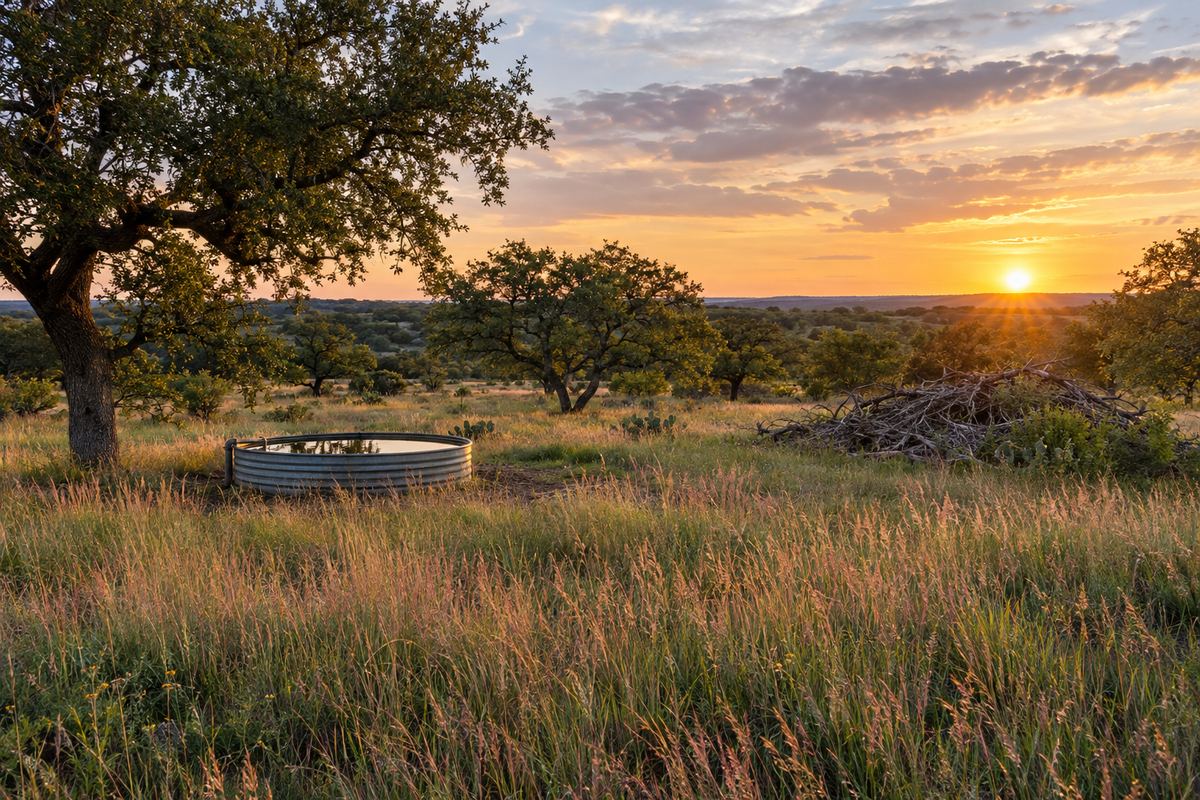
Texas Parks and Wildlife requires a minimum of three qualifying wildlife-management practices to be implemented each tax year. Texas Tax Code Section 23.51(7) lists seven: habitat control, erosion control, predator control, providing supplemental water, providing supplemental food, providing shelters, and making census counts. The plan is submitted to the county tax appraisal office on the prescribed TPWD form, and the county reviews it against current guidelines before approving or denying the application.
The transition risk is significant and frequently overlooked. Wildlife-management valuation does not transfer automatically when a property changes ownership. A new owner must maintain all qualification requirements — open-space agricultural eligibility, acreage compliance, an active plan, and implementation of the required practices — to continue receiving the productivity-based appraisal. If the new owner fails to file a plan, fails to implement the required practices, or converts the land to a non-qualifying use, the appraisal district can remove the special appraisal, and a change to a non-qualifying use triggers rollback tax for each of the three preceding years the land received it (Tax Code §23.55).
When ownership changes, the new owner should contact the county appraisal district promptly, confirm what documentation is required to maintain qualification, and work with a qualified tax professional and wildlife biologist to ensure the plan is in place before the applicable filing deadline.
How Ranch Use Affects Valuation: Cattle, Recreation, Native Wildlife, Exotic Game, or Combination
Ranch use affects both appraisal classification and market value, and the two do not always move in the same direction.
A working cattle operation that qualifies under 1-D-1 agricultural appraisal may have a lower market value per acre than a high-fenced exotic-game ranch with developed infrastructure — but the cattle operation's appraisal classification may be more straightforward to maintain through a sale. Recreational land without a qualifying agricultural or wildlife-management use carries no productivity appraisal benefit and is taxed at market value. Native wildlife habitat managed under an active wildlife-management plan can qualify for 1-D-1 status if all requirements are met. Exotic-game operations introduce additional complexity, including state permitting requirements and the question of whether exotic species qualify under the applicable county's wildlife-management guidelines.
Combination uses are common across Texas and affect appraisal classification in ways that require county-specific analysis. Existing 1-D-1 agricultural or wildlife appraisal status varies by property and county, and a listing that describes a property as having "wildlife valuation" should be verified against actual county appraisal records.
Whatever the combination, treat any "wildlife valuation" or "ag exempt" line in a listing as a claim to verify, not a fact: ask the seller for the appraisal district's notice and the current plan on file.
Texas Hunting Ranch Pricing by County and Property Characteristics
Pricing for Texas hunting ranches varies significantly by county, acreage, improvements, water, views, fencing, and proximity to Austin. All figures below are indicative market observations based on publicly available data and should be independently verified against current county and listing data before any financial decision is made.
Per-acre pricing generally rises with proximity to Austin, improved roads, a residence and reliable water. Compare a tract against recent sales of similar size and water in the same county rather than against county-wide averages, and ask your agent for the specific comparable sales behind any price opinion.
Water features matter more in some counties than others. Springs, perennial creeks, stock tanks, water wells with documented output, and lake frontage each affect pricing differently. A Llano County tract with a spring-fed creek and an established deer program will attract a different buyer profile — and a different price range — than a comparable-acreage dry-land tract in the same county with no surface water.
Fencing infrastructure, existing improvements (lodge, equipment barn, water distribution), and documented wildlife inventory also affect per-acre pricing. When a ranch is priced above raw land because of high fencing, exotic herds or improvements, evaluate whether that price is supported by verifiable income or simply by the cost of the improvements.
Due-Diligence Checklist for Texas Hunting Ranch Buyers
Ranch due diligence covers more ground than a residential transaction. The items below are a starting framework, not a substitute for qualified professional review.
Fencing and physical condition
- Fence condition and type: high-fence, low-fence, or partially fenced
- Perimeter and cross-fence integrity, gate access, and road condition
Wildlife
- Wildlife inventory — native and exotic species present, documented population estimates
- Existing game permits and applicable Texas regulations governing native versus exotic animals
- Active wildlife-management plan on file with the county, and whether the plan meets current TPWD requirements
Water
- Water rights, wells, springs, and stock tanks — confirm groundwater ownership and any applicable groundwater conservation district regulations
- Surface-water rights and any permitted diversions
- Well production rates, water quality testing, and pump condition
Legal and title
- Mineral rights, timber rights, and grazing rights — confirm what conveys with the surface estate
- Hunting leases, agricultural leases, and any other occupancy agreements that survive closing
- Easements, pipeline rights-of-way, utility easements, and access rights across or through the property
- Legal access to the property from a public road
Appraisal and tax
- County appraisal records and current 1-D-1 status — request directly from the county appraisal district
- Rollback tax exposure if use changes after purchase
This topic involves significant financial, tax, land-use, and legal consequences. We recommend that every hunting ranch buyer engage qualified legal, tax, appraisal, wildlife, and surveying professionals before closing. Our role is to represent your interests in the transaction; it is not to substitute for the professional review that protects your investment. For buyers evaluating commercial and investment property transactions, the same discipline applies across asset classes.
Austin-Area Buyer Demand: Lake Travis, Westlake, Lakeway, Dripping Springs, and Hill Country Proximity
Many Hill Country ranch searches start from Austin, so drive time is a practical filter.
A 90- to 120-minute drive from Austin puts Blanco, Llano, Gillespie, Burnet and Mason counties in range; each has its own county land guide covering groundwater districts and appraisal districts, and the Rural Land Rules Index compares them side by side. For brush-country properties farther south, see our guide to South Texas ranches for sale.
If you are weighing a ranch against a luxury home in the Austin area, compare the full carrying costs side by side: property tax under each appraisal basis, insurance, water and road maintenance, and the time a working ranch requires.
Closer in, the Dripping Springs area offers larger-acreage residential tracts and recreational land with a shorter drive, though many of those tracts are too small or too residential to carry agricultural or wildlife appraisal.
If you are evaluating Texas hunting ranches for sale in the Hill Country or surrounding counties, contact Paragon Realty Group to talk through a specific property, its appraisal records and the due-diligence list above.
Joseph Stancil, TX License #760204, Paragon Realty Group, brokered by eXp Realty, LLC, TX Broker License #603392. General information, not legal, tax or financial advice. Images are AI-generated illustrations, not photos of specific properties.

Joseph Stancil
Founder & Supervising Agent | Paragon Realty Group
Joseph Stancil brings over 13 years of Austin real estate expertise to every article in The Paragon Chronicle. His market analysis draws on proprietary data, direct transaction experience, and deep relationships throughout Austin's luxury communities.