
If you're evaluating south Texas ranches for sale, the decisions you make before closing matter more than the asking price. Water rights, wildlife management, mineral conveyance, ag valuation status, and boundary accuracy all shape what you're actually buying. This guide walks through how the region breaks down, how to verify water and wildlife claims, and the due-diligence questions every offer should answer.
By Joseph Stancil, REALTOR® since 2012, Paragon Realty Group, brokered by eXp Realty, LLC (TREC broker license #603392). Texas Sales Agent License #760204.
What Defines South Texas for Ranch Buyers
South Texas is not a single landscape. Buyers conflate it with the Hill Country, the Coastal Bend, and even the Trans-Pecos — and those distinctions matter when you're evaluating land.
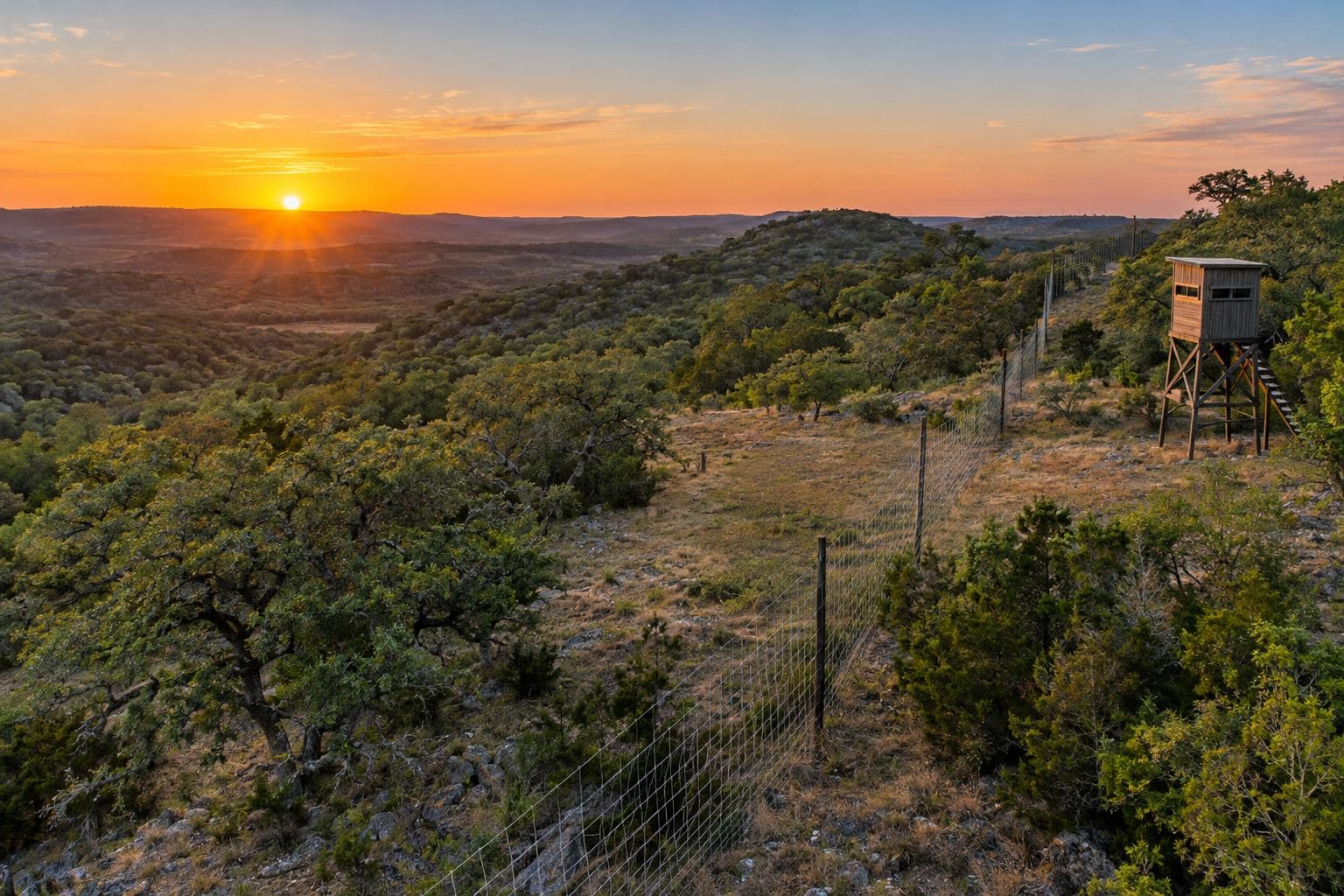
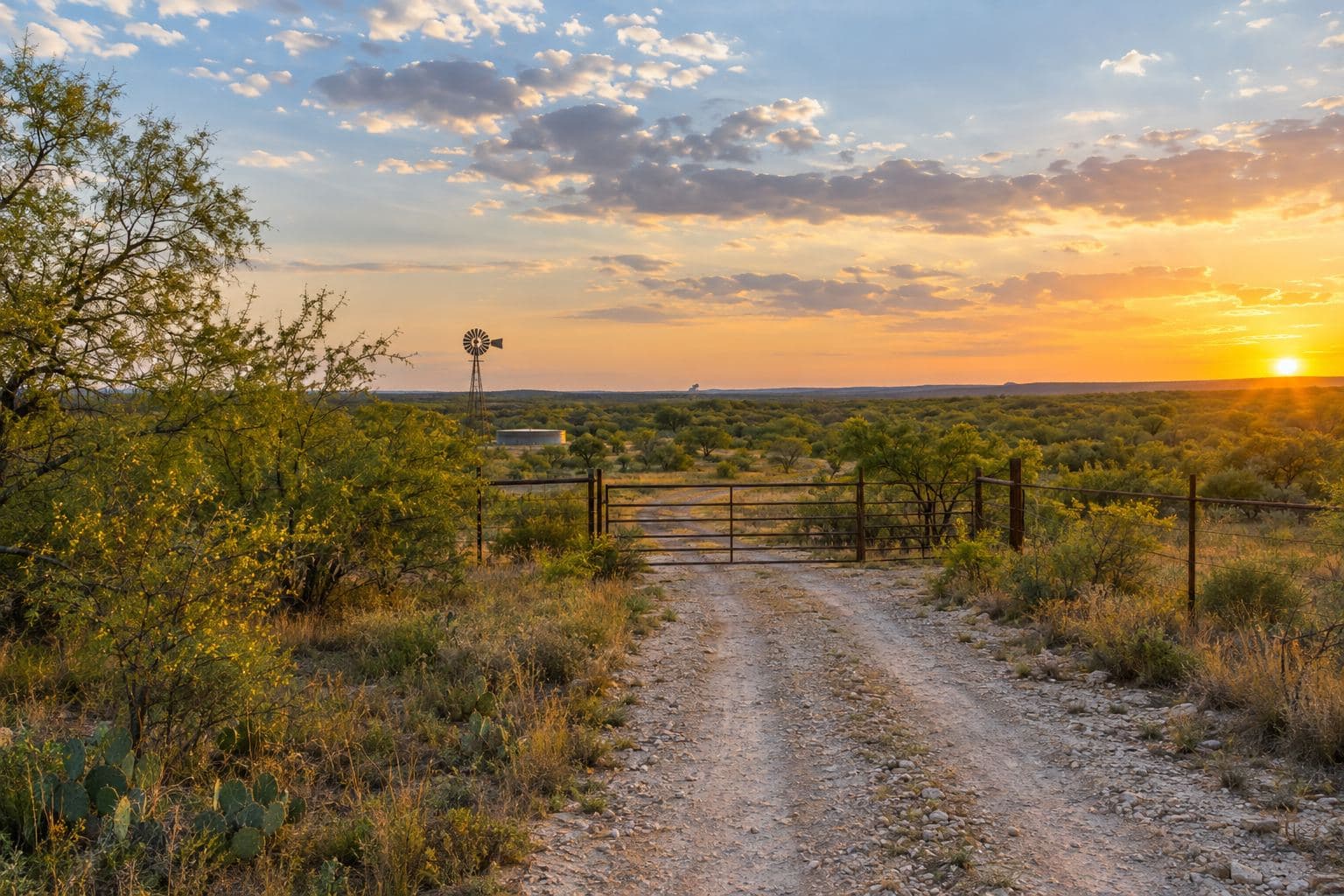
The core of South Texas ranch country is the South Texas Brush Country, a dense, semi-arid region of thornscrub, mesquite, huisache, and guajillo that stretches from the Rio Grande northward into the Edwards Plateau transition. Ranch markets commonly grouped as South Texas include counties such as Webb, Jim Hogg, Brooks, Duval, Dimmit, La Salle, Frio, Zavala and Live Oak. Each has its own water availability, soils, wildlife and pricing, so compare properties within a county before comparing across them.
The Coastal Bend — Refugio, Goliad, and adjacent counties — grades into coastal prairie and bottomland, with different grazing capacity and flood exposure than the dry brush country farther west. To the north, Uvalde County sits at the edge of the Hill Country, where limestone terrain begins to replace the brush-country flats.
Understanding which sub-region a property occupies tells you more about its water situation, carrying capacity, and wildlife potential than any listing description will. Frame your search by county first, then by use.
Property Sizes and What Changes as Acreage Grows
Inventory and prices change weekly, so this section describes what typically differs by size rather than quoting listing counts. Owner-financed small tracts are common in the region; if you consider one, read the financing terms with a Texas real estate attorney, since seller-financed and contract-for-deed sales carry specific requirements under the Texas Property Code.
- Small recreational tracts (under 100 acres): Entry-level access to brush country hunting and recreation, often with limited water infrastructure.
- 100–500 acres: Properties in this range may carry working cattle, established senderos, water wells and basic improvements.
- 500–2,000 acres: Transitional between recreational and working-ranch classification. Expect greater variation in infrastructure quality, water reliability, and mineral status.
- Large ranches (2,000+ acres): These are often priced on a combination of land quality, water assets, wildlife-management history and mineral position.
Price per acre varies with county, improvements, water infrastructure and income potential. Ask for the specific recent comparable sales behind any price opinion before anchoring to a listed price.
Working Ranch vs. Recreational Land vs. Lifestyle Property
Three distinct buyer profiles drive South Texas ranch purchases, and the property type that fits each one is different enough that conflating them creates problems at closing and beyond.
A working ranch in Texas requires genuine agricultural operations or documented ranch infrastructure — cattle pens, perimeter and cross-fencing, water distribution systems, hay production capability, and a headquarters setup that supports daily ranch operations. These properties may carry active grazing leases or stocker programs. If income production or ag valuation qualification is part of your investment thesis, verify that the infrastructure and operational history actually support it. Working ranches are income-producing assets and should be underwritten that way.
Recreational land in Texas applies to properties used primarily for hunting, habitat management, privacy, and outdoor recreation without commercial livestock operations. Much of what lists as a "ranch" in South Texas falls into this category. That's not a criticism — it simply means the buyer's evaluation criteria shift toward wildlife surveys, sendero condition, water availability for game, and lease income rather than livestock carrying capacity.
Lifestyle properties blend both. A 300-acre property with a lodge, a few cow-calf pairs for ag valuation, and managed deer feeders is a lifestyle purchase. Improvements across all three categories may include headquarters structures, barns, cattle pens, hunting lodges, interior roads, perimeter and cross-fencing, water wells, stock tanks, deer blinds, protein feeders, and utility connections. Know which category you're buying before you negotiate.
South Texas Water Rights: Wells, Groundwater Districts, and Surface Water
The Texas Water Development Board's groundwater conservation district map shows which district, if any, regulates wells on a given tract; our Rural Land Rules Index summarizes well, septic and groundwater rules for Central Texas counties.
Water is one of the most consequential assets in a South Texas ranch transaction. Do not assume groundwater or surface water is owned in a simple, uniform manner. Texas water law is fact-specific, layered, and varies by location in ways that can materially affect what you actually control after closing.
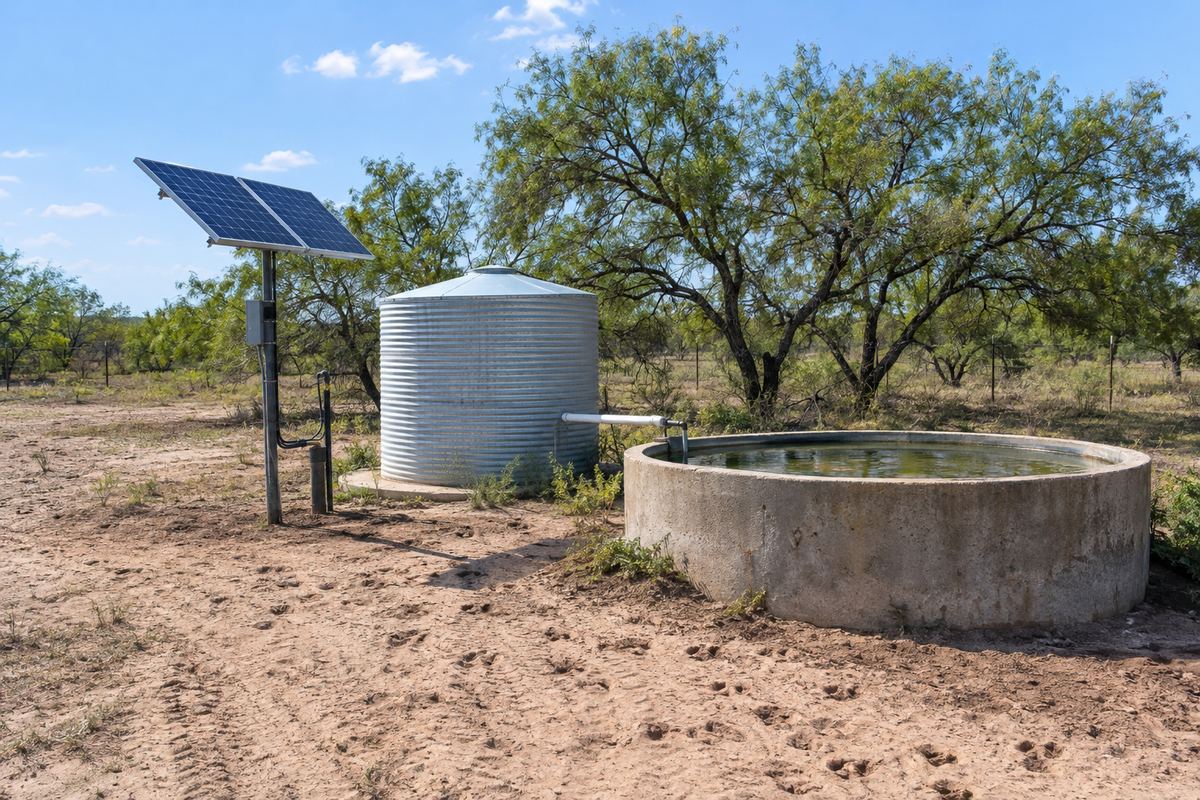
Texas separates surface water and groundwater into different legal frameworks. Surface water — rivers, creeks, and streams — is generally owned by the state and allocated through a permit system administered by the Texas Commission on Environmental Quality. Groundwater is governed separately, largely through groundwater conservation districts (GCDs), which have authority to regulate well permitting, spacing, production rates, and export. The applicable GCD varies by county. Before you close on any South Texas property, identify the applicable groundwater conservation district and obtain advice from qualified Texas water-law counsel or groundwater specialists familiar with that district's rules.
Since July 1, 2026, most TREC contracts, including the Farm and Ranch Contract (TREC No. 25-17, Paragraph 7K), call for the seller to deliver TREC's Seller's Disclosure about Groundwater and Surface Water Rights unless the property has no known well, pond or tank, no surface-water permit, no severed groundwater rights, and gets water only from a named supplier. If the disclosure is owed and never delivered, the buyer may terminate before closing. Treat it as a starting point and verify its answers against district and state well records.
For practical due diligence, verify the following with current professional testing and records — not listing descriptions:
- Well yield and recovery rate under pumping conditions
- Drought resilience — what does production look like in a dry year?
- Creek flow and seasonal permanence for properties with surface water features
- Stock tank and pond permanence — caliche tanks in South Texas can go dry in extended drought
- Water quality — salinity, sulfur content, and mineral load vary significantly across the brush country
- Future drilling rights — confirm whether these are reserved or conveyed in the deed
Review the deed, title commitment, any reservations, leases, easements, and all recorded instruments for water-rights language. Sellers sometimes retain water rights or subject them to existing leases. What the well produces today and what you're legally entitled to pump tomorrow are two different questions.
Wildlife Management, Hunting Rights, and Habitat Evaluation
For fencing choices and the 1-d-1 wildlife valuation, see our companion guide to Texas hunting ranches for sale. TPWD's white-tailed deer management resources cover harvest, habitat and disease-zone rules.
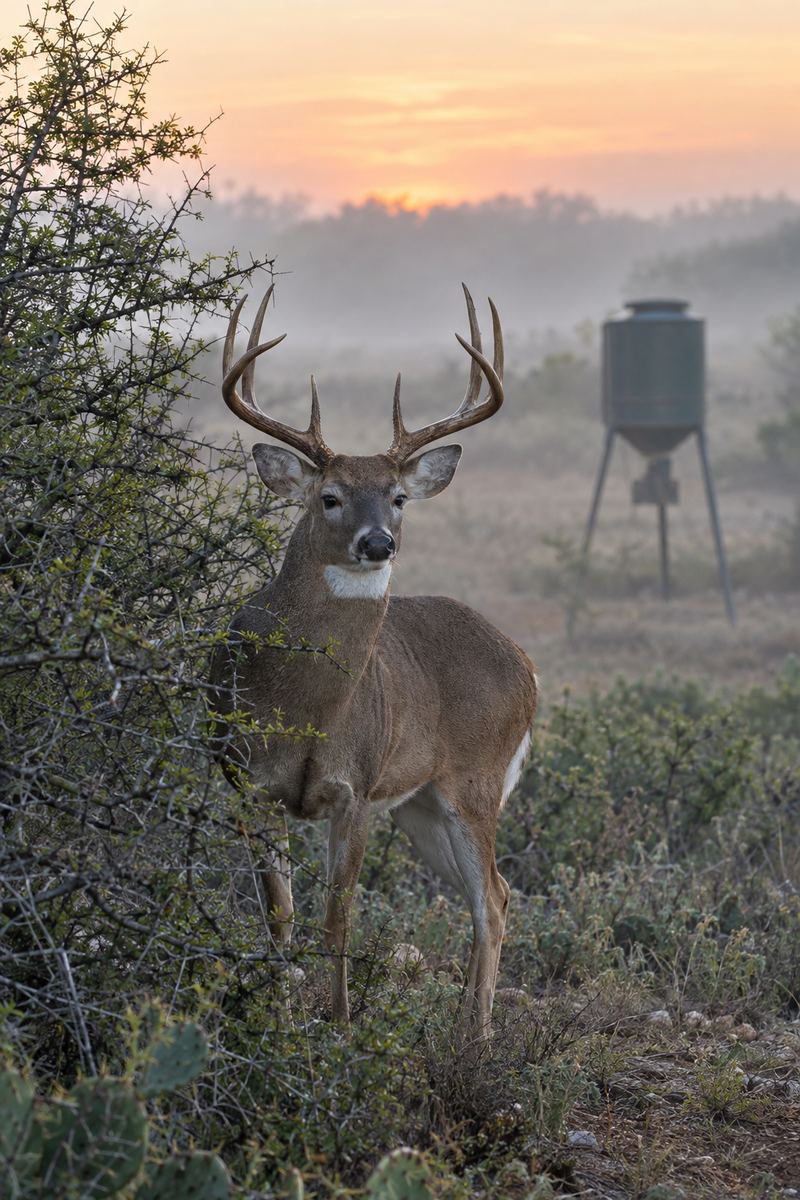
South Texas is known for whitetail deer hunting, and that reputation shapes how many ranches are marketed. Reputation is not a substitute for evidence.
The Texas Parks and Wildlife Department (TPWD) is the appropriate primary authority for Texas wildlife regulations, hunting license and tag requirements, habitat-management programs, and wildlife resources. Before assuming any hunting program is compliant, verify current regulations with TPWD directly. Rules governing antler restrictions, MLD permits, and supplemental feeding change, and what was lawful on a property under a prior owner's MLD tag may require reapplication under new ownership.
When evaluating a property's wildlife value, require biological evidence. That means harvest records showing age structure and body weight data, game camera surveys with date-stamped imagery, and documentation of any active wildlife management plans. Do not accept listing language about "trophy deer" or "excellent hunting" as a substitute for actual survey data. We do not promise wildlife populations, trophy quality, hunting success, or income from hunting leases without that evidence — and neither should a seller.
Confirm whether the sale includes or excludes hunting rights, blinds, feeders, and any existing hunting leases. An active hunting lease that runs with the land can affect your use of the property for years. Review lease terms, expiration dates, and renewal options as part of your title review. Fencing condition, sendero maintenance, water availability for game, and predator management history all affect habitat quality and should be field-verified, not assumed.
Ag Exemption, Mineral Rights, and Title Considerations
The Railroad Commission of Texas publishes well, pipeline and permit records that help buyers see existing oil and gas activity on or near a tract before reviewing the title commitment.
Two frequent buyer misconceptions in South Texas ranch transactions involve ag valuation and mineral rights. Both can significantly affect the economics of ownership, and neither is automatic.
Agricultural valuation — commonly called the "ag exemption" — is a property tax valuation method, not a tax exemption. It values land based on its agricultural productivity rather than market value, which can reduce annual tax liability substantially. But ag valuation and wildlife-management valuation are not automatic. Verify with the applicable county appraisal district that the property currently qualifies, review the historical qualification record, confirm ongoing management obligations required to maintain the valuation, and assess rollback-tax exposure if the use changes after closing. Under Tax Code §23.55, a change to a non-qualifying use triggers rollback tax for each of the three preceding years the land received the special appraisal.
On mineral rights: do not assume the buyer automatically receives water rights, mineral rights, hunting rights, grazing rights, timber, or royalties. South Texas has a long history of severed mineral estates. The surface and the minerals may have parted company generations ago. Review the deed, title commitment, all reservations, leases, easements, and recorded instruments before drawing any conclusions about what conveys.
Easements deserve specific attention. Easements, access restrictions, pipelines, transmission lines, or boundary disputes may affect the property in ways that don't appear on a county map or listing description. Pipeline corridors and power line easements cross South Texas properties regularly. An easement that bisects a sendero, limits surface use over a pipeline ROW, or restricts access to a water source is a material encumbrance — identify it before you're under contract.
Ranch Due Diligence Checklist: Survey, Inspection, and Environmental Review
A brokerage inspection does not replace surveys, title work, boundary retracement, environmental review, well testing, septic evaluation, structural inspection, or legal and tax advice. Treat each of those as a separate, professional engagement — not as something a walk of the property covers.
The checklist below is a starting framework for any South Texas ranch:
Survey and Boundary
- Commission a current survey or boundary retracement, not a reliance on an older plat
- Verify that fences align with legal boundaries — they frequently don't
- Confirm acreage matches the deed description
Water and Infrastructure
- Well yield test and water quality analysis (current, not historical)
- Septic system inspection and confirmation of permitted capacity
- Verify roads, utility connections, and improvements match listing representations
Title and Legal
- Full title commitment review with attention to exceptions, reservations, and easements
- Mineral ownership search
- Hunting lease and grazing lease review
Environmental and Regulatory
- Floodplain designation (FEMA FIRM map review)
- Wetlands delineation if applicable
- Endangered-species habitat assessment — South Texas supports several listed species
- Environmental contamination review, particularly on properties near oil-and-gas activity
- Pipeline corridors, transmission line easements, and oil-and-gas surface use agreements
Floodplain, wetlands, endangered-species habitat, environmental contamination, pipeline corridors, transmission lines, and oil-and-gas activity require property-specific investigation. A listing description will not flag these for you.
Comparing South Texas Ranches with Austin-Area Luxury Real Estate
Buyers who want ranch land closer to Austin often compare South Texas with Hill Country counties such as Llano, Mason, Kerr and Bandera. Texas A&M's Natural Resources Institute tracks land fragmentation and ownership trends county by county at Texas Land Trends.
Some South Texas ranch buyers are Austin-area homeowners weighing ranch ownership against further investment in residential real estate, and the comparison is worth making honestly.
Compared with a luxury home in the Austin area, a South Texas ranch is a different kind of asset decision: typically less liquid, more operationally complex, taxed on a different basis, and a different relationship to the land.
Ranch ownership offers things a residential property cannot — space, privacy, wildlife, and in some cases income from hunting leases or livestock operations. But it also carries ongoing management obligations, water risk, and infrastructure costs that don't appear on a residential balance sheet. Remote brush-country tracts in counties like Webb or Jim Hogg also call for a plan for managing land you may visit only occasionally.
Our Central Texas ranch and land guides cover groundwater districts and appraisal districts county by county; the same checks apply in South Texas.
If you're evaluating south Texas ranches for sale, contact Paragon Realty Group to talk through a specific property and the due-diligence list above.
Joseph Stancil, TX License #760204, Paragon Realty Group, brokered by eXp Realty, LLC, TX Broker License #603392. General information, not legal, tax or financial advice. Images are AI-generated illustrations, not photos of specific properties. Verify property-specific details with qualified professionals before making a purchasing decision.

Joseph Stancil
Founder & Supervising Agent | Paragon Realty Group
Joseph Stancil brings over 13 years of Austin real estate expertise to every article in The Paragon Chronicle. His market analysis draws on proprietary data, direct transaction experience, and deep relationships throughout Austin's luxury communities.