

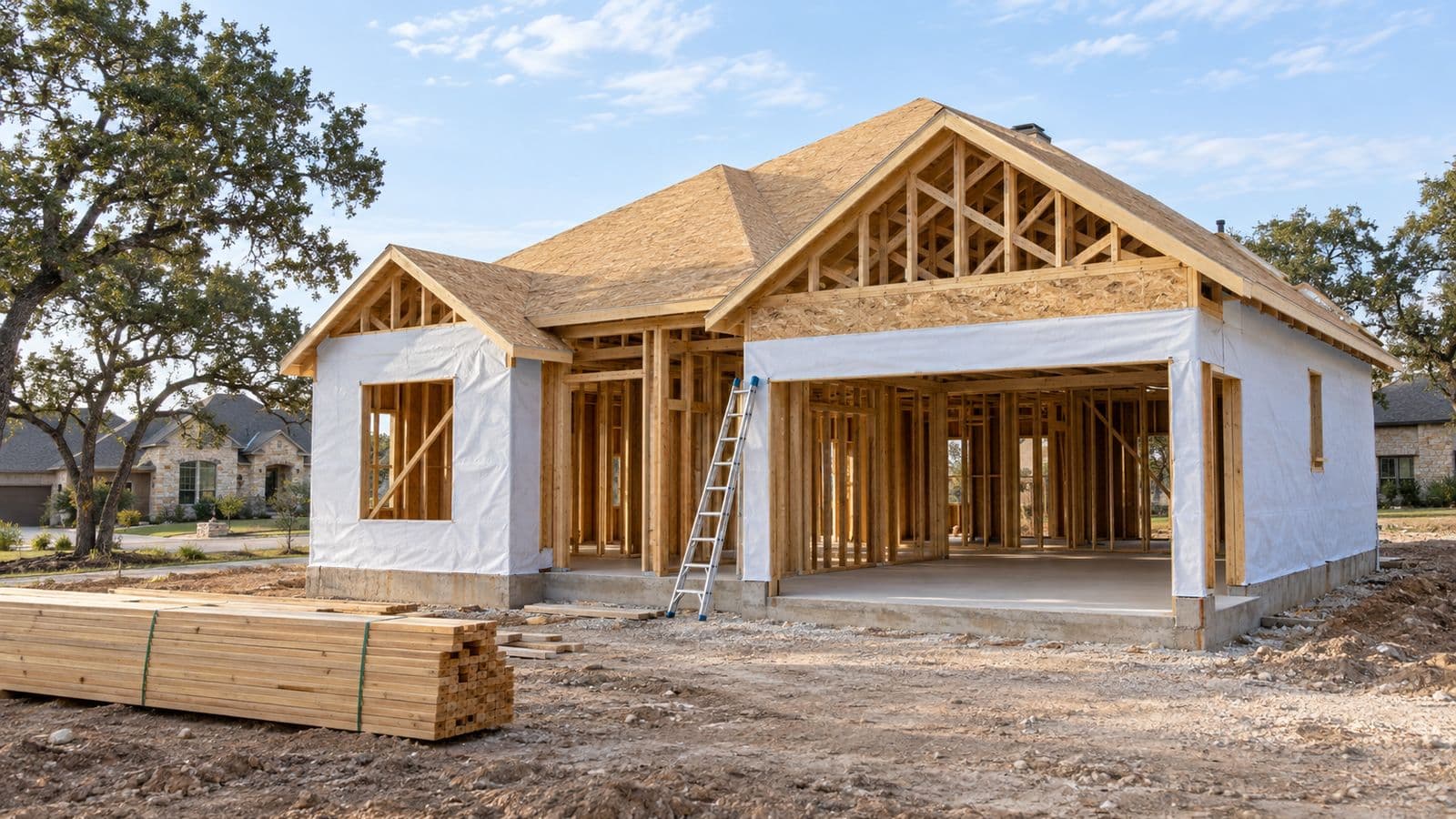
Hire your own TREC-licensed inspector at five points: pre-pour, pre-drywall, insulation, final and 11 months, because each stage of a new build covers up the one before it.
By Joseph Stancil, REALTOR® since 2012, Paragon Realty Group, brokered by eXp Realty, LLC (TREC broker license #603392). Texas Sales Agent License #760204.
The five inspections at a glance
A new construction inspection is not one visit. It is a series of visits timed to the moments when a part of the house is about to disappear. Here is the schedule we suggest to buyers building in Georgetown, Williamson County and the rest of Central Texas:
| Visit | Timing | What your inspector can still see | What covers it next |
|---|---|---|---|
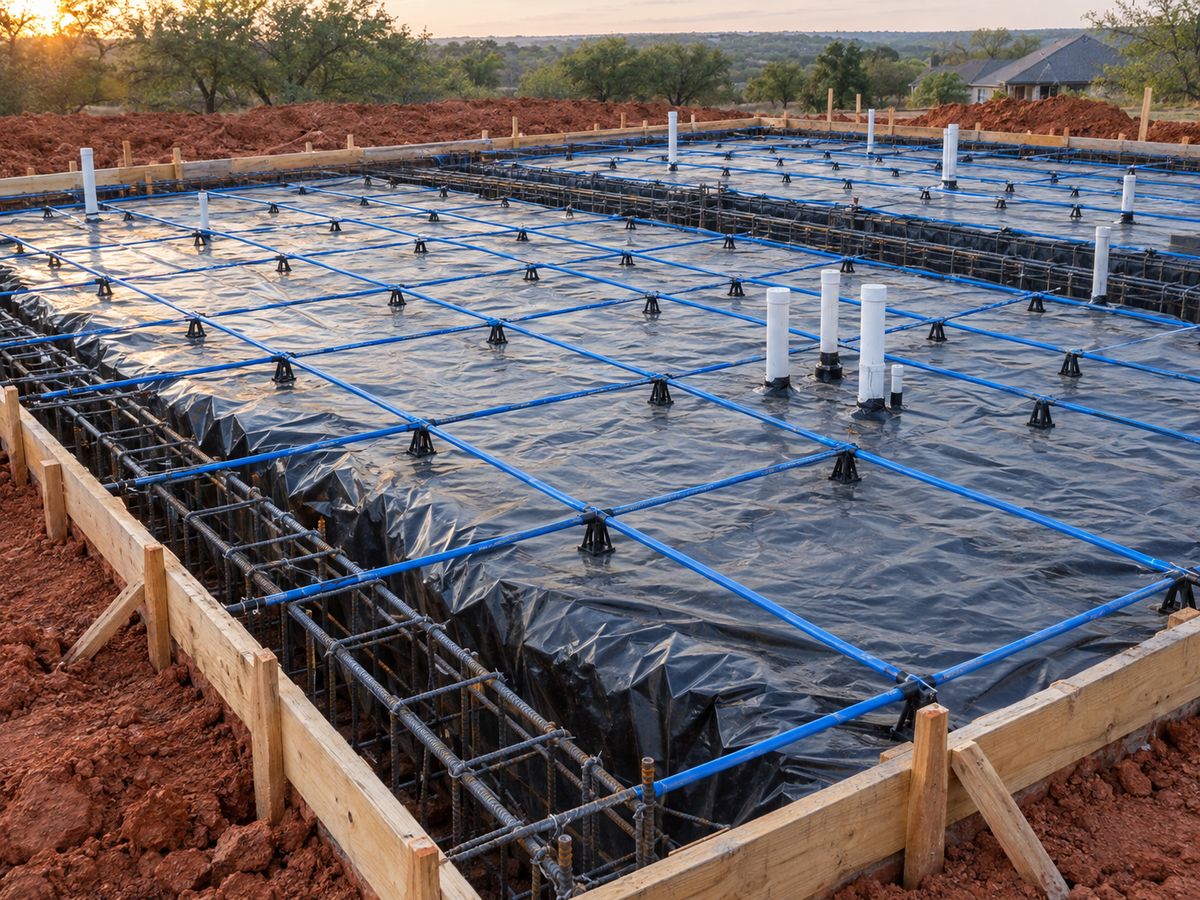
| 1. Pre-pour | Forms, steel and under-slab plumbing set; no concrete yet | Vapor retarder, under-slab piping, rebar and post-tension cables on their supports, beam trenches | Concrete |
| 2. Pre-drywall | Framing, roof, windows and rough-in trades done | Framing connections, straps and hold-downs, window and door flashing, duct runs, drain slope, nail plates, electrical boxes | Insulation |
| 3. Insulation | Insulation installed; walls still open | Voids, gaps and compressed batts at corners, plates, penetrations and attic transitions | Drywall |
| 4. Final | Before the builder's orientation and closing walk-through | Finished systems, roof, grading and drainage, doors, windows, appliances, finishes, unfinished work | Your move-in |
| 5. 11-month warranty | About a month before workmanship coverage ends | Cracks, settlement, leaks, drainage and system issues that surfaced after a year of use | Expiring coverage |
The order matters more than any single visit. Miss the pre-pour window and the slab's insides are sealed for the life of the house. Miss insulation and the next look at those wall cavities comes only if someone cuts the drywall open.
Why concrete, insulation and drywall change the math
On a resale home, an inspector sees a finished house and reports on its condition. On a new build, the useful information is visible for days, sometimes hours, before the next trade arrives. A misplaced cable support or a missing nail plate costs little to correct while it is exposed. The same item found after closing can mean opening finished walls, or it may never be found at all.
That timing is also why the final inspection alone leaves gaps. A finished-house inspection in Texas is, by rule, "a limited visual survey and basic performance evaluation," not an exploratory probe, according to the TREC Standards of Practice at 22 TAC §535.227. Your inspector reports what can be seen. Phase visits are how you make more of the house visible.
What the city inspector checks, and what it doesn't
Cities do inspect new homes. In Georgetown, a building permit is required to build a house, and builders schedule the required inspections through the city's online permitting system, according to the City of Georgetown's permits and inspections page (updated October 14, 2026). The city says its team "ensures that all construction meets safety standards and city codes."
Those visits matter, but they serve the city, not you. Municipal inspections check code compliance at set stages. The city inspector doesn't write a report for you, isn't hired to judge workmanship beyond code minimums, and isn't available to answer your questions. TREC's rules draw the same line from the other side: its standards say a licensed inspector is not required to determine "compliance with any code." The two jobs overlap but are not the same.
There is no statewide builder regulator behind either one. The Texas Residential Construction Commission was abolished and its governing act expired on September 1, 2009, with its records transferred to the Comptroller, according to the Texas Sunset Advisory Commission. In a 2022 investigation, KXAN reported that outside local permitting offices "there is not much regulation for home builders in Texas." An inspector who works for you fills that space.
Pre-pour: the slab before concrete
Most Central Texas homes sit on a slab, and the pre-pour visit is the only time anyone sees what is inside it. A pre-pour inspection typically looks at whether the vapor retarder is intact and lapped, whether under-slab plumbing is supported and protected, whether rebar and post-tension cables sit on their supports at the planned height, and whether beam trenches are clean and to depth. The inspector compares what is in the forms with the foundation plan, if the builder shares one.
This is the window that closes fastest. Concrete trucks are scheduled around weather and crews, and a pour can move up on short notice. Ask the construction manager for advance word before the pour, and have your inspector booked before the forms go in.
Pre-drywall: framing, flashing and rough-ins
Once framing, roofing, windows and the plumbing, electrical and HVAC rough-ins are done, the house is the most open it will ever be. A pre-drywall inspection commonly covers framing connections, straps and hold-down hardware, firestopping, window and door flashing and the weather barrier, roof and valley flashing, duct support and sealing, drain slopes, nail plates where pipes and wires pass through studs, and electrical box locations.
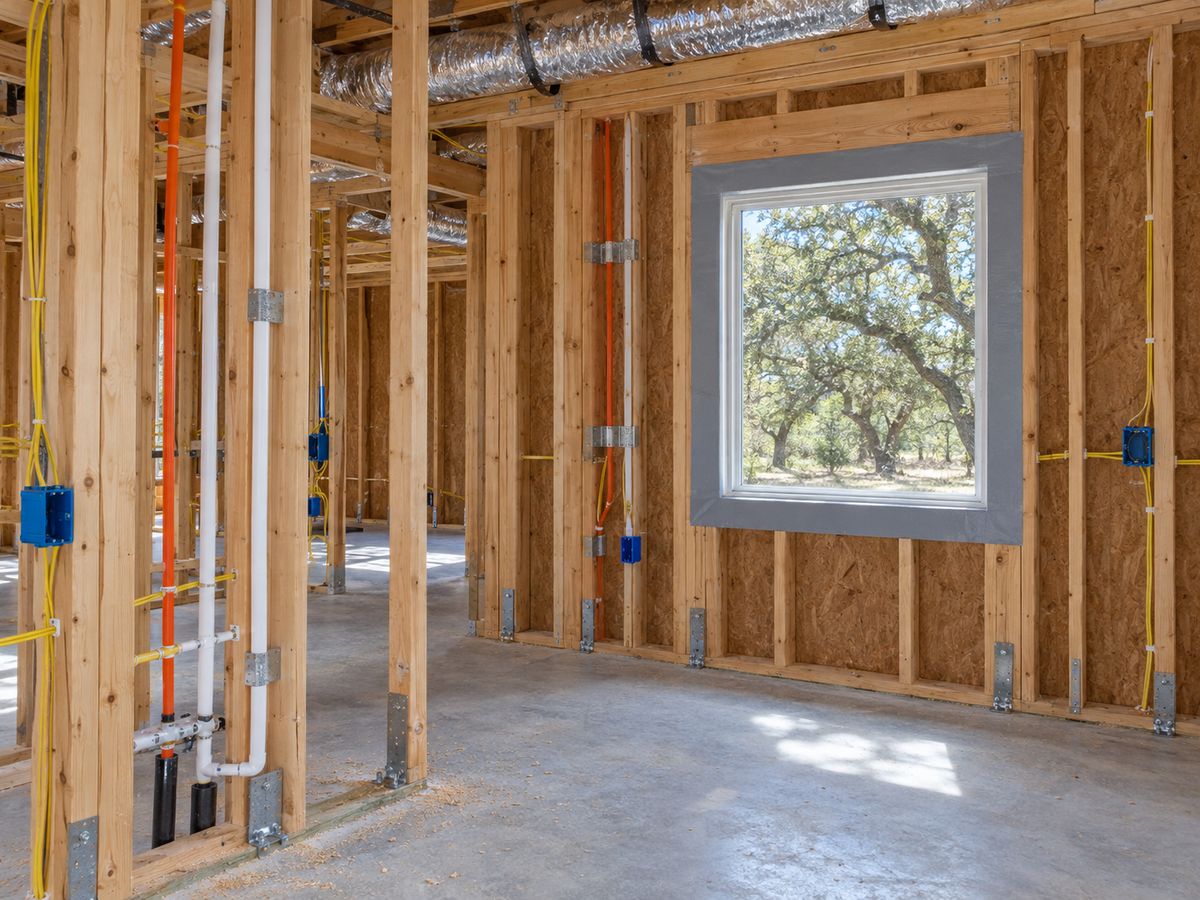
Flashing deserves special attention. A window that leaks into a wall cavity may not show a stain for months, and by then the source is behind finished drywall and paint. Photos at this stage become part of your record of how the house was built.
Insulation: the shortest window
Some inspectors combine this visit with pre-drywall. If the schedule allows, a separate look after insulation and before drywall is worth asking about. Common findings are bays left partly empty, batts compressed behind wiring or pipes, gaps along the upper wall plate and around penetrations, and thin coverage where walls meet the attic. Each one is a quick fix that day and an energy and comfort problem for years after.
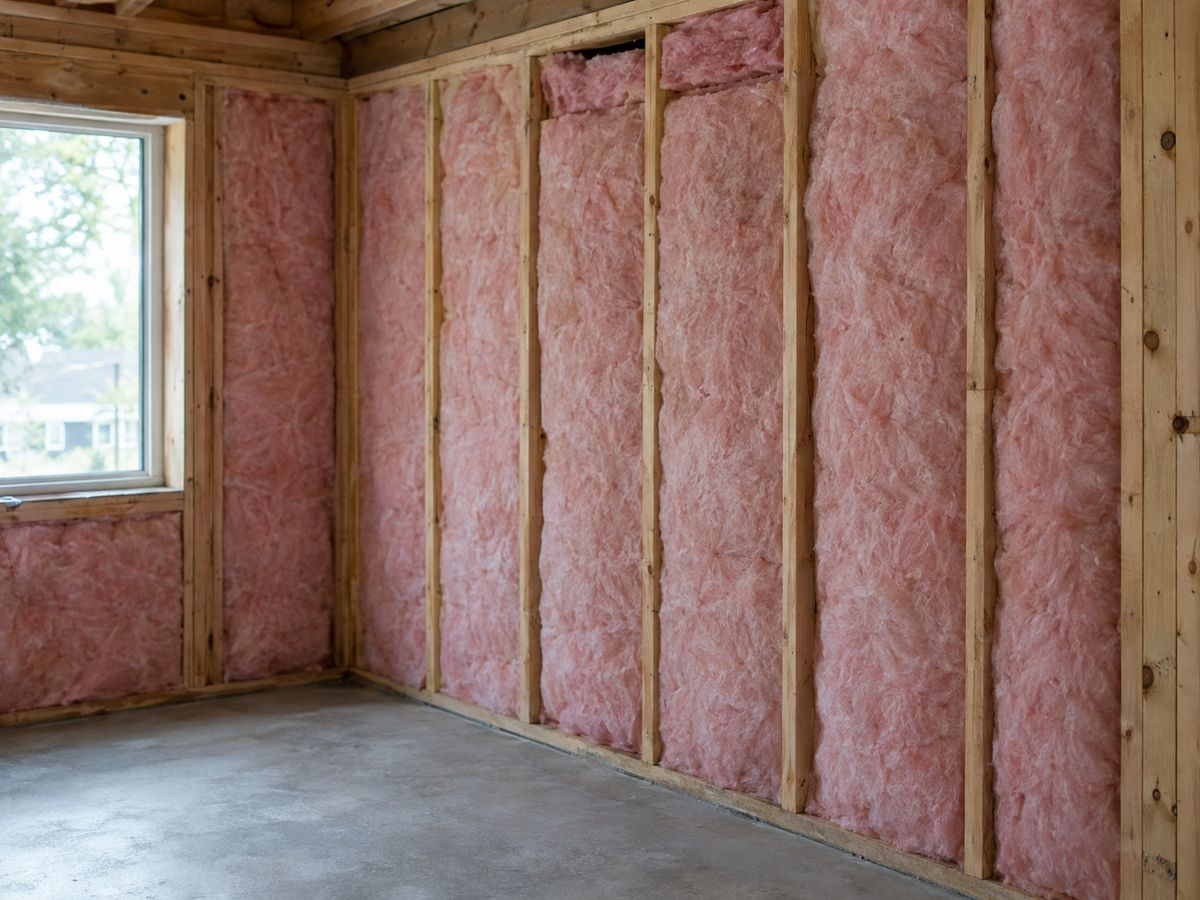
Insulation and drywall crews can follow each other within a day or two. If you want this visit, it has to be in the written schedule, not left to a phone call.
Final and 11-month: finished house, then a year of living
The final inspection happens before the builder's orientation or closing walk-through, so the report can shape the punch list. This is the visit most buyers already expect: roof, attic, grading and drainage, doors and windows, plumbing fixtures, electrical devices, HVAC operation, appliances and finishes, plus anything that is simply unfinished. Because the home is now substantially complete, the TREC Standards of Practice apply as the minimum scope.
The 11-month inspection is the one buyers most often skip. A house that has been lived in through a Texas summer and winter shows things a new house can't: slab and drywall cracks, doors that start to stick, settling around flatwork, roof or plumbing leaks, and drainage that pools after heavy rain. Schedule it about a month before your workmanship coverage ends, which in many builder warranties is the first anniversary of closing. Read your warranty document for the exact dates and the claim process, and file items in writing before the deadline.
Getting site access in writing
Here is the catch: during construction, the builder controls the site. Some builder contracts restrict buyer-hired inspectors, or anyone other than the builder's team, from entering before closing, or limit access to walk-throughs at the builder's discretion. Others are flexible. The only way to know is to read the contract you are offered, before you sign it.
If access matters to you, and we think it should, negotiate it up front. Request an addendum, or the builder's signed approval, that covers:
- Which visits. All five: the slab, open framing, insulation, the finished house and the 11-month check.
- Notice. How much warning you will get before the pour and before insulation.
- Site rules. Escorts, hours, hard hats and any visitor release the builder requires.
- Credentials. Your inspector's TREC license and proof of insurance, sent in advance.
- Reports. Who receives each report and whether the builder will answer each item in writing.
Your inspector should observe, photograph and report, never repair, cut or alter the work. Changes by outside parties can affect warranty coverage, so keep the inspector's role clear in the request. If a builder declines phase access, you have learned something before you are committed, and you still have the final and 11-month visits.
Picking a phase inspector in Texas
Texas licenses real estate inspectors through TREC, and you can confirm any inspector's license status on the TREC License Holder Search by choosing "Inspector." Then ask a few questions:
- How much phase work do you do? Reading a slab before the pour is a different skill from a resale inspection.
- What will the written scope say? TREC's Standards of Practice set minimums for homes that are "substantially completed," so the scope of a pre-pour or pre-drywall visit comes from your agreement with the inspector. Get it in writing.
- Can I see a sample phase report? Look for photos, plain language and a location for every item.
- Do you have any business ties to the builder? Your inspector should work only for you.
- What does each visit cost? Prices vary by home size, visit and inspector, so get a written quote for every phase you plan to use.
Turning findings into a paper trail
Send every report by email to the construction manager and request a reply on each item in writing. Take photos of each correction while it is still exposed. Keep reports, emails, responses and photos together, with dates.
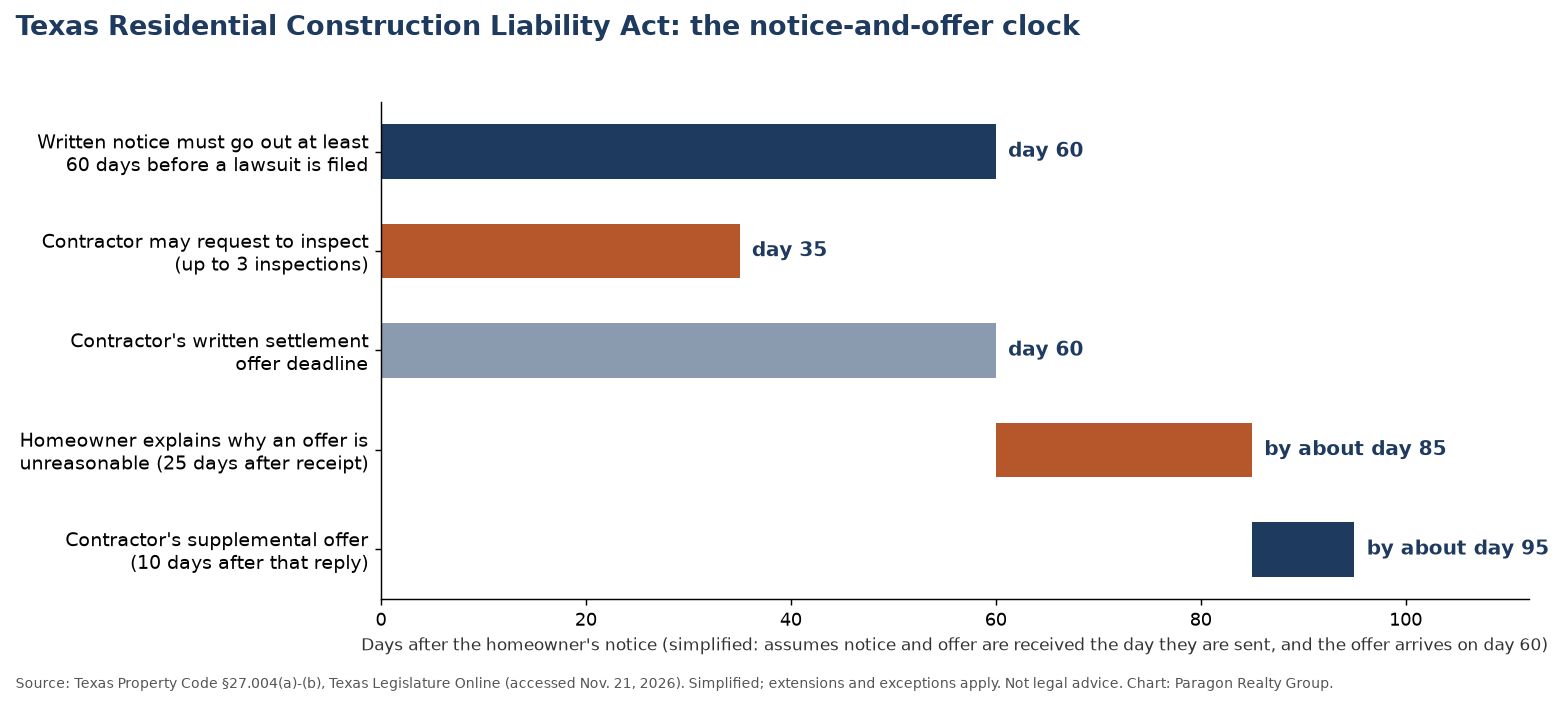
That record has a legal use, too. Before suing a contractor over a construction defect, the Texas Residential Construction Liability Act, Property Code Chapter 27, generally requires the homeowner to send written notice, by certified mail with return receipt requested, 60 or more days before filing, describing the defects in reasonable detail. Section 27.004 also asks the homeowner to share evidence such as reports and photographs, gives the contractor up to three inspections in the 35 days after it receives notice, and allows a written settlement offer within 60 days.
This is a legal process with requirements and exceptions. If a defect turns into a dispute, talk with a Texas attorney. Either way, the habit that protects you is dated, written, photographed records from the first visit on.
Talk with Joseph before you visit a model home
The order of events matters with new construction. Builders often set rules about how a buyer's agent is registered, and a first visit to a model home on your own can affect how your agent is able to take part. Call or message Joseph before that first visit.
As your buyer's agent, we review the builder's contract and inspection-access terms with you before you sign, coordinate phase dates with the construction manager, and keep the report trail organized through the 11-month walk. Joseph spent years in the building trades before his first real estate license, which helps him spot when a stage looks off. That complements your inspector; it doesn't replace one. Learn more about our buyer representation, the Wolf Ranch community and living in Georgetown. If your build will take many months, our guide to mortgage rate locks covers how lock periods work.
Frequently asked questions
Do you need a home inspection on new construction in Texas?
Yes, a private inspection is worth it on new construction, even though the city inspects. Municipal inspections check code compliance at set stages for the city, not workmanship for you, and no state agency has registered or regulated Texas home builders since the Texas Residential Construction Commission was abolished in 2009. A TREC-licensed inspector who works only for you can document issues before they are hidden. If you can, schedule visits before the pour, before drywall and after insulation, then again before closing and at 11 months.
What does a pre-drywall inspection look at?
A pre-drywall inspection reviews the house while framing and rough-ins are fully exposed. Typical items include framing connections, straps and hold-downs, firestopping, window and door flashing, the weather barrier, roof flashing, duct support and sealing, the slope of drain lines, steel plates shielding pipes and wiring where they cross studs, and where electrical boxes sit. Because drywall hides all of this, the visit has to happen in the short window after the rough-in trades finish and before insulation or drywall crews arrive.
When should the 11-month warranty inspection be scheduled?
Schedule it about a month before your builder's workmanship coverage ends. In many builder warranties that is the first anniversary of closing, but read your warranty document for the exact dates and the claim process. A year of living in the house can reveal cracks, sticking doors, leaks, drainage problems and settling that weren't visible at the final walk-through. Send the report to the builder in writing, keep a copy with dates, and file claims before coverage expires.
Can a builder refuse to let my inspector on site?
It can, if the purchase contract gives the builder control of site access before closing. Some builder contracts limit or bar buyer-hired inspectors until title transfers, while others allow escorted visits. Read the contract before you sign and request an addendum or signed approval listing each inspection, the notice you will receive and the site rules. If the builder refuses, you learn that before you are committed, and you can still schedule the final and 11-month inspections.
How do I check that a Texas home inspector is licensed?
Use TREC's online License Holder Search, select the Inspector license type and confirm the license is active. You can search by name or license number. Then ask how many new construction phase inspections the inspector has done, request a sample phase report, and get a written scope for each visit, since TREC's Standards of Practice set minimums for substantially completed homes. Confirm the inspector has no business relationship with your builder.
Joseph Stancil, TX License #760204, Paragon Realty Group, brokered by eXp Realty, LLC, TX Broker License #603392. General information, not legal, tax or financial advice. Sources: 22 Texas Administrative Code §535.227, Standards of Practice (via Cornell LII; amended effective February 1, 2022); Texas Real Estate Commission License Holder Search; Texas Property Code Chapter 27, §27.004 (Texas Legislature Online); Texas Sunset Advisory Commission, Texas Residential Construction Commission (abolished September 1, 2009); City of Georgetown, "How do I get a building or inspection permit?" (updated October 14, 2026); KXAN, February 5, 2022. All sources accessed November 21, 2026. The inspection items described are typical examples and do not describe any specific builder or house. Paragon Realty Group is not affiliated with any builder, inspector or organization named. If you are already in a written agreement with another broker, this is not a solicitation of your business. Illustrations are AI-generated and do not show an actual home or job site.

Joseph Stancil
Founder & Supervising Agent | Paragon Realty Group
Joseph Stancil, first licensed in real estate in 2012 and in Texas since 2021, writes every article in The Paragon Chronicle. His market analysis draws on proprietary data, direct transaction experience, and deep relationships throughout Austin's luxury communities.